















Week 342
It is week 342 and we are thinking about how the education reform conversation changes when everyone...

Jump to: Top Tasks | From the Field | Key Resources | Moments of Resilience
It’s week 326 and we are thinking about what we can learn about the road ahead from a deeper look at the findings from the most recent long-term NAEP.
Last week we shared a quick analysis on the morning of the release, putting a spotlight on the fact that 13 year olds (who were in school when Covid hit) haven’t recovered academically, while 9 year olds (who weren’t in school during Covid) were faring better. Since then we have had a chance to spend more time with the results and here are some other trends that matter to our work:
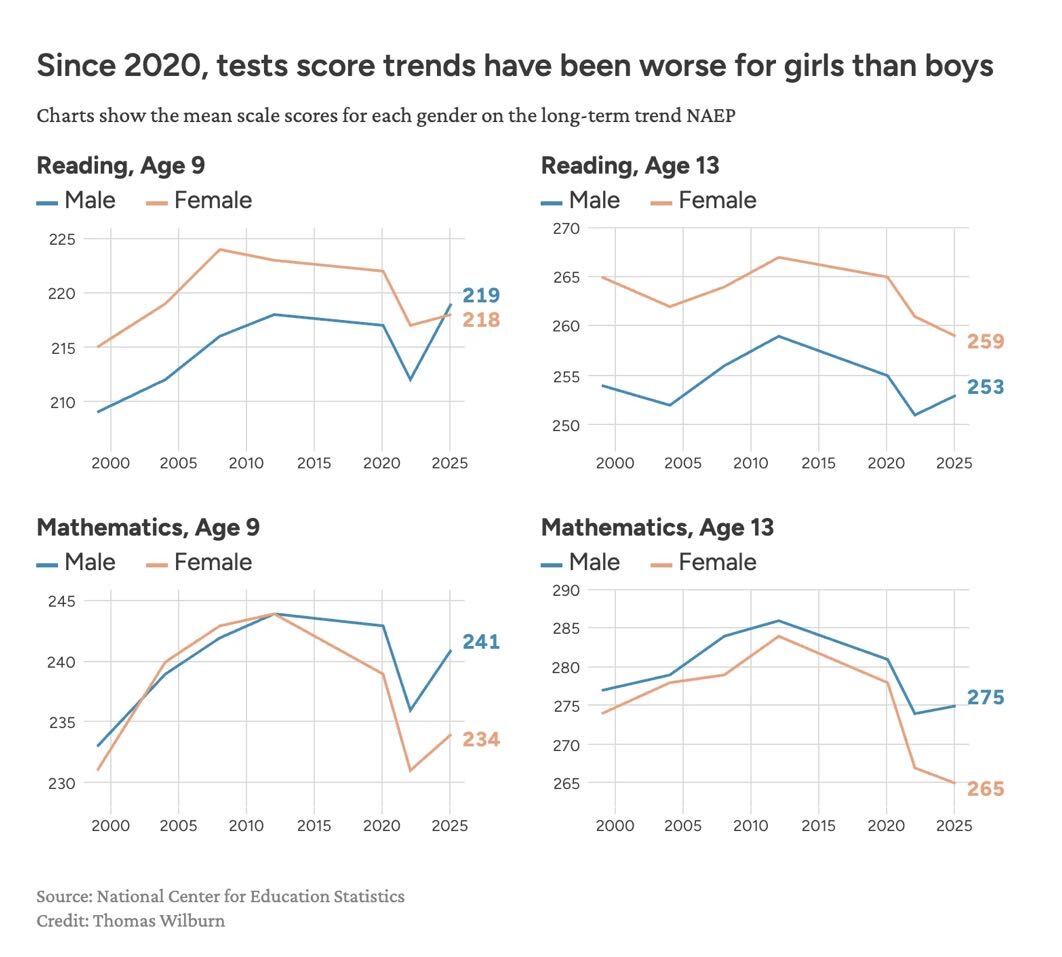
Boys are doing better than girls, not just in terms of the trends but in absolute levels as well in three of the four long-term NAEP tests. In fact, 9 year olds boys scored higher than girls in reading for the first time in the 50 year history of the test. These results challenge the narrative—prevalent in so many media stories—that boys are falling behind in school. Among 13 year olds, boys are now a full grade level ahead of girls in math.
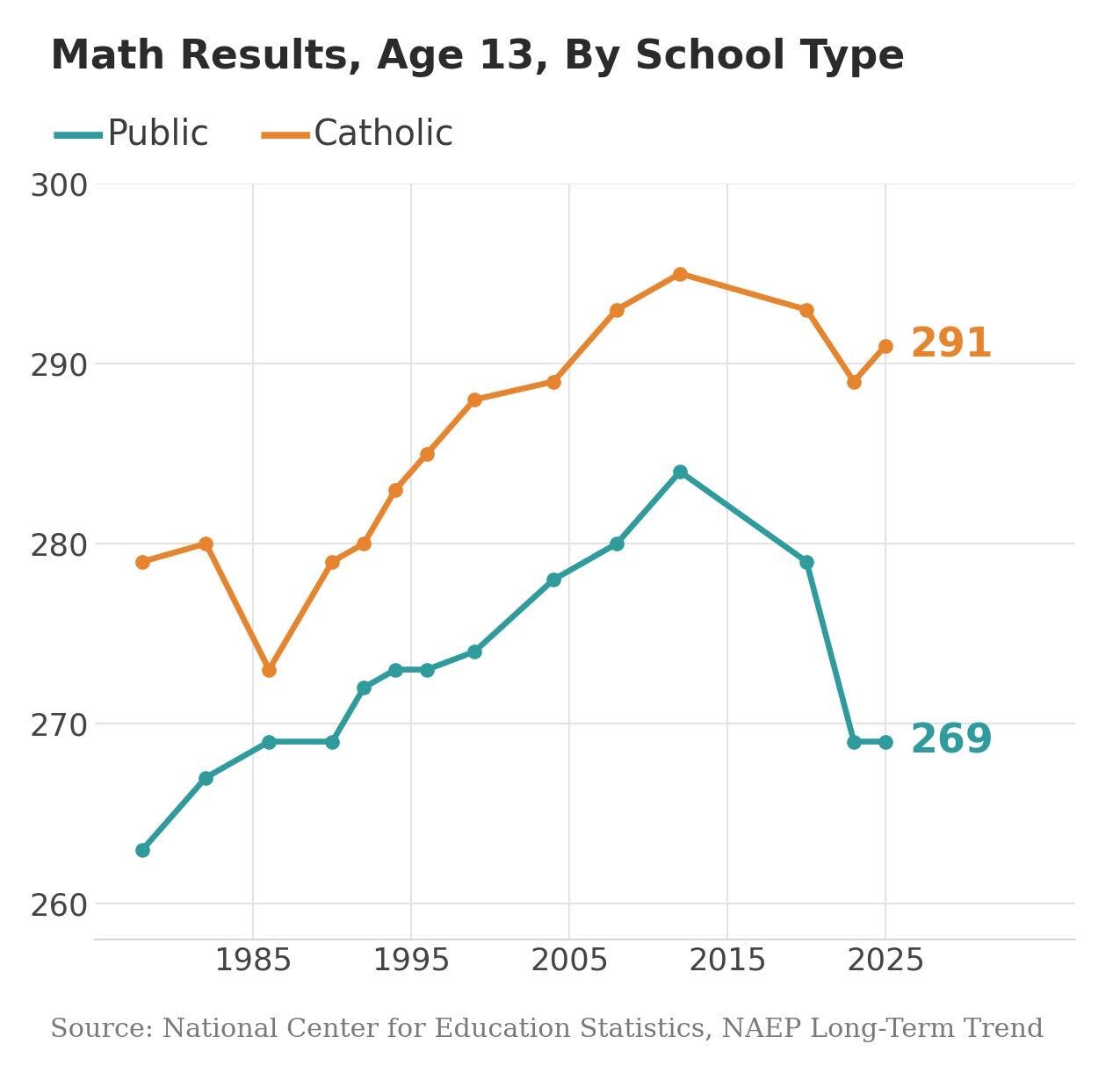
The gap between Catholic schools and public schools has never been larger. While students in public schools experienced the largest declines on record over the past 10 years, Catholic school students fared much better and are now performing significantly better across reading and math for both 9 year olds and 13 year olds.
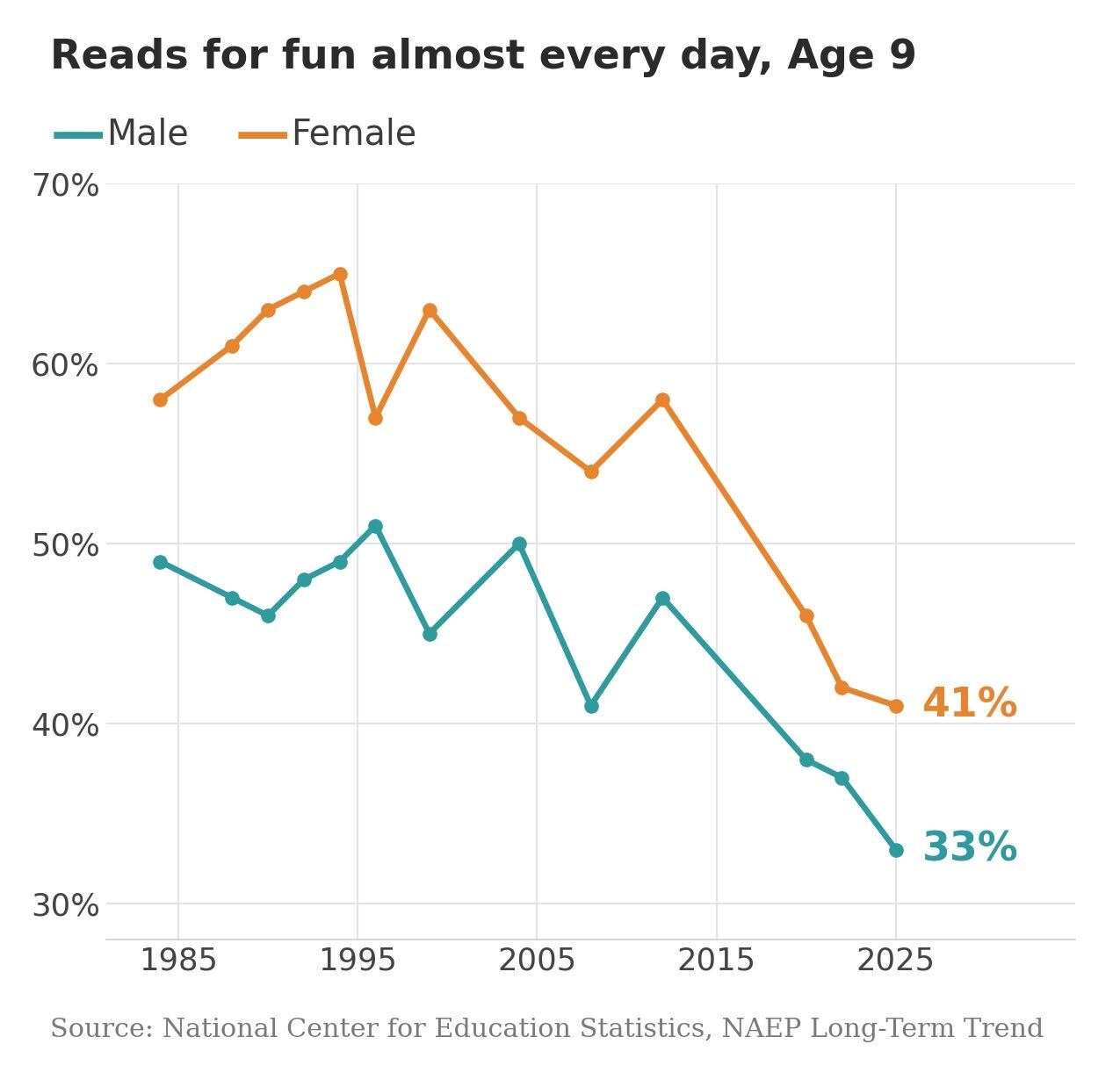
No group escaped the decline in reading for fun. One of the biggest trends happening outside of school is the sharp decline in the percentage of students who read for fun nearly every day. In fact, this decline can be seen for both boys and girls and across all racial and ethnic groups.
Finally, the percentage of 13 year olds who don’t do homework has nearly doubled since 2012. Combined with a decline in reading, this trend is creating enormous headwinds as we work to help catch kids back up.
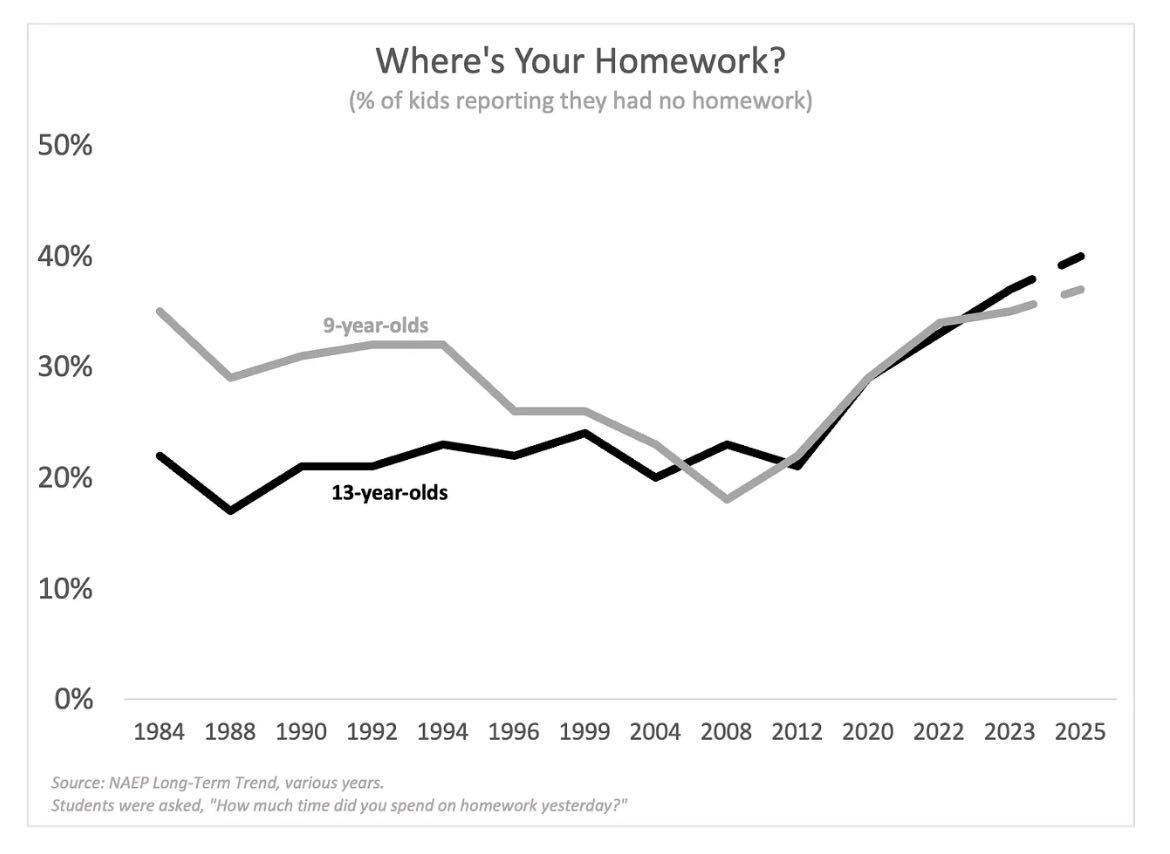
There will be a lot more work to do to understand the underlying drivers of these trends but it’s clear we are living in a new educational reality that started before Covid hit and was greatly accelerated by the long-term closure of schools. Our job now is to take these facts seriously as we strive to bring bolder, more creative and more comprehensive solutions to America’s learning crisis.
Last week in the New Reality Roundup, we looked at fiscal and enrollment challenges for districts and noted new research showing that families want summer learning camps but are limited by costs. This week, we hear Eric Hanushek on the need for bigger solutions and wrap up the legislative session in Louisiana with three career wins and more.
Learn from the states weathering the storm while thinking bigger about the solutions to our learning crisis
Eric Hanushek, writing for Education Next, believes “today’s policymakers and educators need to look beyond policies aimed at short-run remediation and consider more fundamental change.”
In his analysis of the main NAEP results released last year, Hanushek shows that the school closures during the pandemic had a greater impact on student learning than “any single event in the postwar period,” with 8th grade students losing over a year of math and half a year of reading. At the same time, it’s also clear that our educational declines started well before Covid hit.
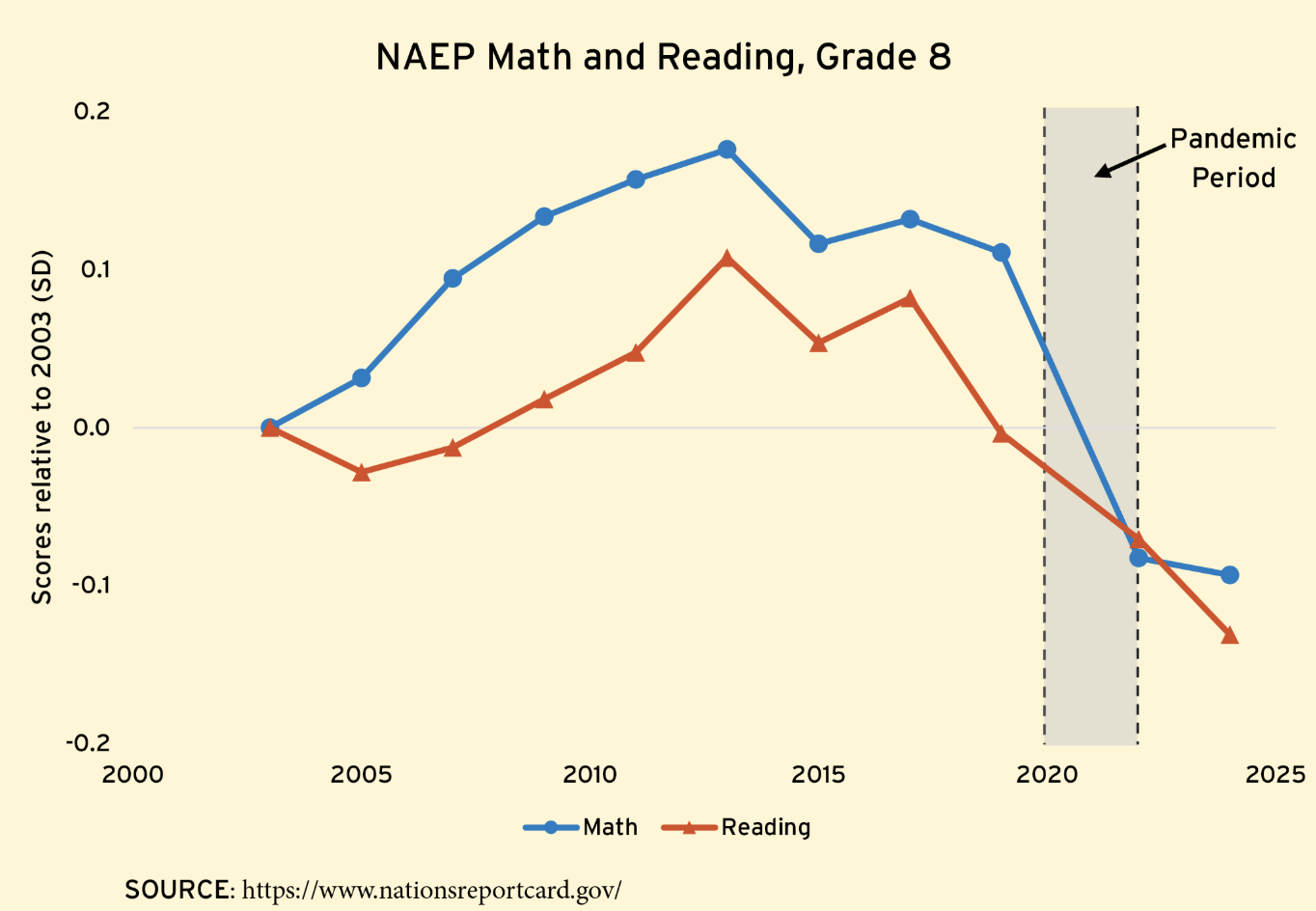
Given the outsized role and responsibilities that state governance has on education quality, it is likely not a surprise that both the depths of the crisis and the resilience of learning recovery efforts were not equally distributed across the country. When looking at just how far each state fell from their peak performance by drawing upon the results of the main NAEP released last year, Eric found a wide split.
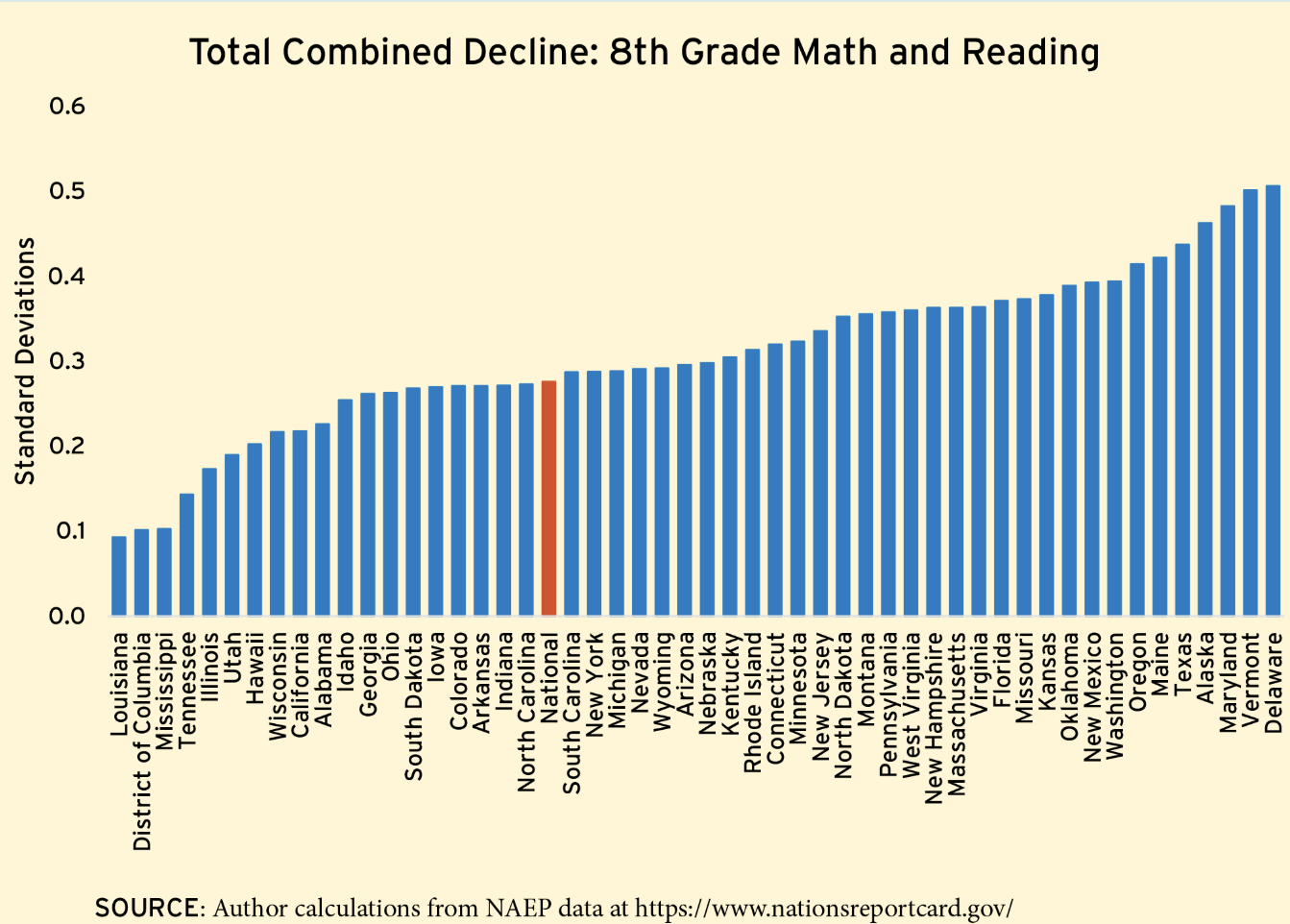
While all states lost some ground from their peak performance, Louisiana, Mississippi and Tennessee, states that readers of the Roundup know have scored consistently higher marks on NAEP following the pandemic, have only fallen 0.1 standard deviations. On the other end, the declines in Delaware, Vermont and Maryland were nearly five times larger.
The starting point for charting a path forward is to learn from the states that have done the most to weather this difficult storm. But Hanushek makes the case that we also need to think bigger than any state has to date: “Education reform efforts over the past half century have aimed to enhance or improve various aspects of the public education system while retaining the essence of its institutional structure … Their collective failure accentuates the need to look at the problem differently and to pursue fundamental institutional change.
Learn from Louisiana in advancing career pathways
“With universal tutoring and choice in place, the natural next place to turn was career pathways,” Kelli Bottger explained as she took stock at the close of Louisiana’s 2026 legislative session. “We need our students in Louisiana to have the skills they need to enter the workforce when they graduate high school. What’s happening now is that, for many students, they’re graduating into unemployment because of a lack of clear career pathways. I knew that needed to change.”
This year, the Louisiana team worked on policies across the Believe in Better framework, securing an additional $43 million for the GATOR scholarship, an additional $30 million for the first-in-the-nation universal tutoring program and $1 million for charter facilities. But it was work on career pathways that stood out with three key reforms:
“There’s still more to do on career pathways,” Kelli said, “But with the data system in place and every student in Louisiana exposed to a range of career options, I think we’re poised for real progress. I’m thankful that our legislators are taking this seriously.
At CarolinaCAN, Executive Director Marcus Brandon has been working to expand educational opportunities for students by putting more money in the hands of more parents across the Tar Heel State. The bill that he’s driving forward this year will provide qualifying students with $390 a year that can be used for tutoring and other services to help kids get back on track, an investment of over $21 million a year. The bill has been added to an omnibus bill in the Senate, a key step in the journey to securing its passage.
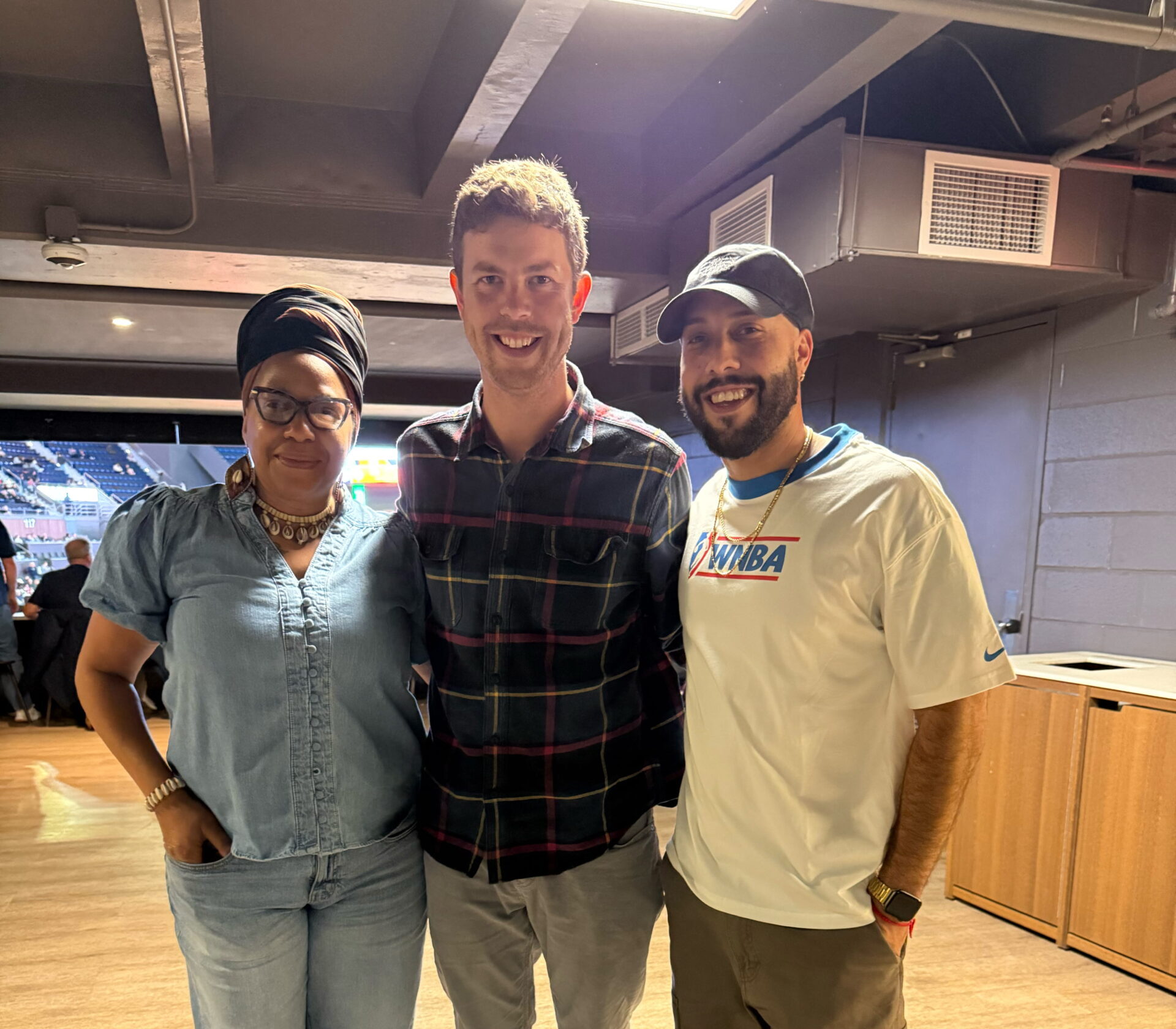
The ConnCAN team were the guests of the Connecticut Sun WNBA team at a recent game as an acknowledgement for their partnership with the Tow Youth Justice Institute, a program that mentors detained youth who are getting a second chance. ConnCAN ran a series of advocacy trainings from identifying elected officials to telling their story. “We’re making sure that a kid’s mistakes in their past aren’t defining their future,” Director of Community Engagement Luis Ortiz tells us.
In a survey of elected school board members, Brookings finds that school boards are much older than the US population and only a quarter would give their districts an ‘A’ rating, among many other fascinating headlines.
In Education Next, Anna Egalite argues that traditional school calendars now have so many holidays and teacher workdays that the four-day schoolweek is quietly becoming the norm.
Checker Finn, writing at Fordham, believes that now is the time for advocates to fight for higher standards and greater assessment rigor to turn sliding national achievement around.
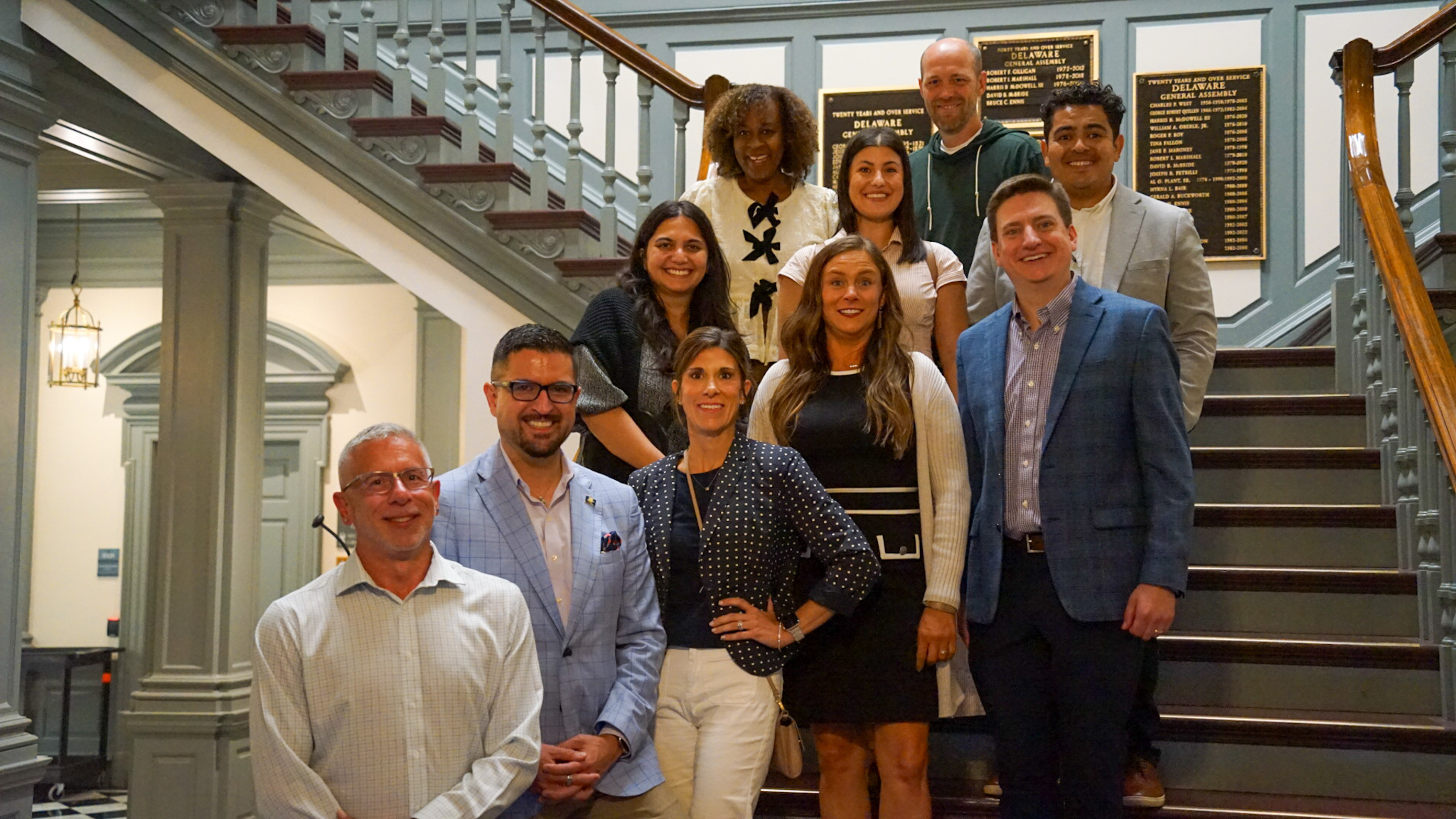
A number of 50CAN state executive directors gathered at the Delaware state capitol in Dover to show their support for DelawareKidsCAN’s Britney Mumford as she testified in support of SB302, a fundamental reimagining of the student funding formula that has been a priority for the CAN for the past six years. “I had the privilege of sharing the moment with colleagues from across the 50CAN network who were visiting Delaware this week,” Britney posted on Facebook. “There is still work to do, but today was a reminder that lasting change happens when people stay committed to the work, year after year.” DelawareKidsCAN ended the day with the bill passing through committee unanimously. It next moves to a full vote on the House floor.