















Week 342
It is week 342 and we are thinking about how the education reform conversation changes when everyone...

Jump to: Top Tasks | From the Field | Key Resources | Moments of Resilience
It is week 342 and we are thinking about how the education reform conversation changes when everyone agrees the status quo is unacceptable.
In the last edition of the Roundup, we brought you the then just published piece by Nikole Hannah-Jones entitled: In Fighting for Every Black Child, Did I Betray My Own?
Since its publication, the article has emerged as the most talked about education story of the year with The Fordham Institute compiling a list of 86 articles and responses. Dozens of these follow-up articles have unpacked the implications of one of America’s most prominent advocates of integration questioning the wisdom of sending her daughter to a majority low-income school in New York City and writing in searing detail about the ways her daughter felt wronged by the experience.
When asked about the article, NYC Mayor Zohran Mamdani remarked “We know that Black and Brown students are not being adequately served.” He went on to say “It should not be that a child or a family can only come to expect that if they are in the right school. Every school should be the right school.”
As the discussion has evolved from shock to a desire for concrete improvements in NYC schools and beyond, two policy ideas in particular have gotten the spotlight: tutoring and honest grading. One reason Najya Hannah-Jones’ problems went unnoticed for so long was that she was getting As in subjects where she wasn’t actually mastering the material. Her mother–like so many parents in that situation–mistook those good report cards with actual grade level achievement. When testing revealed the extent of her daughter’s problems, it was tutoring that ultimately got Najya back on track. So for this edition of the Roundup, we are going to take a closer look at the policy reforms that can help make things better by building on those two insights.
Last time in the New Reality Roundup, we looked at the fiscal crisis in New York and the challenges at keeping CTE teachers’ skills current as fields evolve. This week, we look into two problems that took center stage in Nikole Hannah-Jones’ piece that are solvable right now.
In the wake of Nikole Hannah-Jones’ zeitgeist-altering column, New York Times reporters Sarah Mervosh, Francesa Paris and Claire Cain Miller polled 30 education researchers and had them rank the impact of contemporary education policy ideas. “Two ideas surfaced as most effective: frequent small group tutoring during the school day for students who need it, and the science of reading, a systematic approach to teaching reading that puts a focus on phonics and other evidence-based practices,” the authors write. And this is a case where parents are aligned with the experts: providing free tutoring for students who fall behind was the most popular policy idea tested in the 50CAN Education Opportunity survey of 23,000 parents released earlier this year.
So what will it take to provide this popular, evidence-based policy program at scale? New research published at EdWorkingPapers provides some important background as well as new insights: “Following the onset of the COVID-19 pandemic, approximately 4.2 billion dollars of state-directed recovery funding was dedicated to tutoring and accelerated learning over the course of four school years. Even the sunsetting of these funding sources (i.e., the “ESSER cliff”) has not reversed the evolution of tutoring from a peripheral intervention into a standard instructional activity in schools.”
“According to the NCES pulse survey,” the authors continue, “The share of schools offering tutoring increased to a new high of 85% in June 2025, with 42% providing tutoring characterized as high-dosage (i.e., delivered in one-on-one or small-group sessions of at least 30 minutes, three or more times per week).”
With the growth of tutoring come challenges, and the most prominent challenge identified by researchers is staffing the work against the aggressive growth of these programs. To better understand what characteristics of tutors–from demographics to level of experience–matter when staffing effective tutoring, researchers worked with Amplify by random assignment of tutors to student groups and comparing reading growth results over a three-month timeframe. Here are the headlines of what they found:
Building programs that recruit and support high-quality tutors will be essential to further growth and provide more families with the opportunity. By expanding the focus on who can be an effective teacher while doubling down on the need for programs that ensure long-term relationships with students, we can make the most of this moment to help students catch back up.
Tutoring is what helped Nikole Hannah-Jones’ daughter course correct, but that course correction could have happened far earlier had she not been misled by overly rosy report cards. Yet a family’s right to know–accurately–-how their children are doing in school is increasingly a promise that the system is not meeting. Here’s The Argument’s Kelsey Piper writing on the Nikole Hannah-Jones story:
“It took Hannah-Jones years to realize that her daughter was severely behind in school — that despite getting good grades, she had huge deficits in her math knowledge, for example, that led to her failing New York’s standardized Algebra I exam … Student grades ought to reflect how well a student is doing. If a student is getting good grades, their parents ought to be able to assume that they’re adequately academically prepared for the next year’s material. This is, these days, broadly not true.”
In the 50CAN Educational Opportunity Survey, we found that there were huge discrepancies between the percentage of parents who believed their students were on grade level and the percentage students who actually scored on grade level on the NAEP. NewMexicoKidsCAN Executive Director Amanda Aragon Bernabe shared how this is playing out on the ground: “We have a big problem with perception vs. reality. Notably, mid- to high-income families are even more likely to believe their child is above grade level when they are not, highlighting an urgent need to address this discrepancy.”
But a new parent survey from Learning Heroes also suggests parents are beginning to wake up to the discrepancy. “Since 2022, the percentage of parents who think their children are at or above grade level in math has dropped 9 percentage points to 83%, according to new data from Learning Heroes, a nonprofit focused on educating parents about their kids’ performance. In reading, it dropped 5 points to 88%. The percentages are similar to early 2021 when pandemic school closures left clear evidence that their children’s performance was suffering,” Linda Jacobson writes in an article in The 74 on the findings
Robert Pondiscio argues that solving this problem is a foundational responsibility of schools: “A competently managed school puts a qualified teacher in front of children every day … Teachers are expected to assign work, examine it, and provide feedback to students. They assess what children know and can do. Grades and report cards convey meaningful information to students and parents. When a child falls behind, someone notices and intervenes.”
GeorgiaCAN has graduated their 14th cohort of Empowered Parents Invested in Change (EPIC), bringing the total number of graduates trained over the past decade to over 700 graduates. Some of those graduates have gone on to win public office, others have opened charters and microschools, and others have been essential voices at the state capitol and in school board meetings as the GeorgiaCAN team continues to drive change. Congratulations to the new graduates – we can’t wait to see what you build next.
JerseyCAN Executive Director Paula White regularly moonlights as an incisive, must-read education writer on her Substack. Her latest entry, a response to Nikole Hannah-Jones’ piece, takes on what she calls the “integration or bust” approach.
50CAN’s Derrell Bradford also weighed in on the Hannah-Jones piece, joining Andrew Rotherham and Jed Wallace on the Wonky Folk podcast, and penning an op-ed for Vital City. “Perhaps more telling is the fact that the schools and schooling Hannah-Jones seeks — well-run schools with challenging academics that serve kids who look like her daughter — already exist, but her own policy preferences hide them from her gaze and deny them from her daughter,” Derrell writes.
50CAN’s Liz Cohen spoke with The Bell Ringer’s Holly Korbey on a troubling finding she’s discovered in the PISA results that she also sees in the results of state assessments: more and more students are falling to the bottom in reading achievement.
 In the 2024-2025 school year, two million students lost a collective 3.5 million days of school due to school facility and infrastructure issues that resulted in canceled classes, the Government Accountability Office reports.
Teach For America gathered over 8,000 alumni for their 35th anniversary last weekend, and a new independent study from Bellwether looks at how alumni have driven the implementation of student-centered change in Denver, Camden and New York City.
The United States Department of the Treasury has released the long-awaited regulations for the federal education tax credit.
 Jay Caspian Kang, writing for The New Yorker, suggests we need to think systematically to improve American schools by expanding tutoring and ignoring “the whims of graduate schools of education.”
Sold a Story: Season 2 launches on October 15, and journalist Emily Hanford has released a trailer, available now.
 Ben Riley, writing for Education Next, believes AI is driving declines in learning, with half of students fully offloading their homework assignments to chatbots.
 In Education Next, Montse Gomendio, Spain’s former secretary of education argues that the length of pandemic school closures in Europe were not the only factor contributing to learning loss.
Three out of 10 school districts in Missouri have moved to a 4-day school week, and new research at EdWorkingPapers finds that adoption “does not result in meaningfully significant positive impacts on non-teacher staffing or retention, nor on schoolwide expenditures.”
 The latest Gallup education poll found that the percentage of Americans who said college was very important dropped to 31%, the lowest number on record. The group with the biggest drop since 2019 was African Americans, who were 25 percentage points less likely to say college was very important.
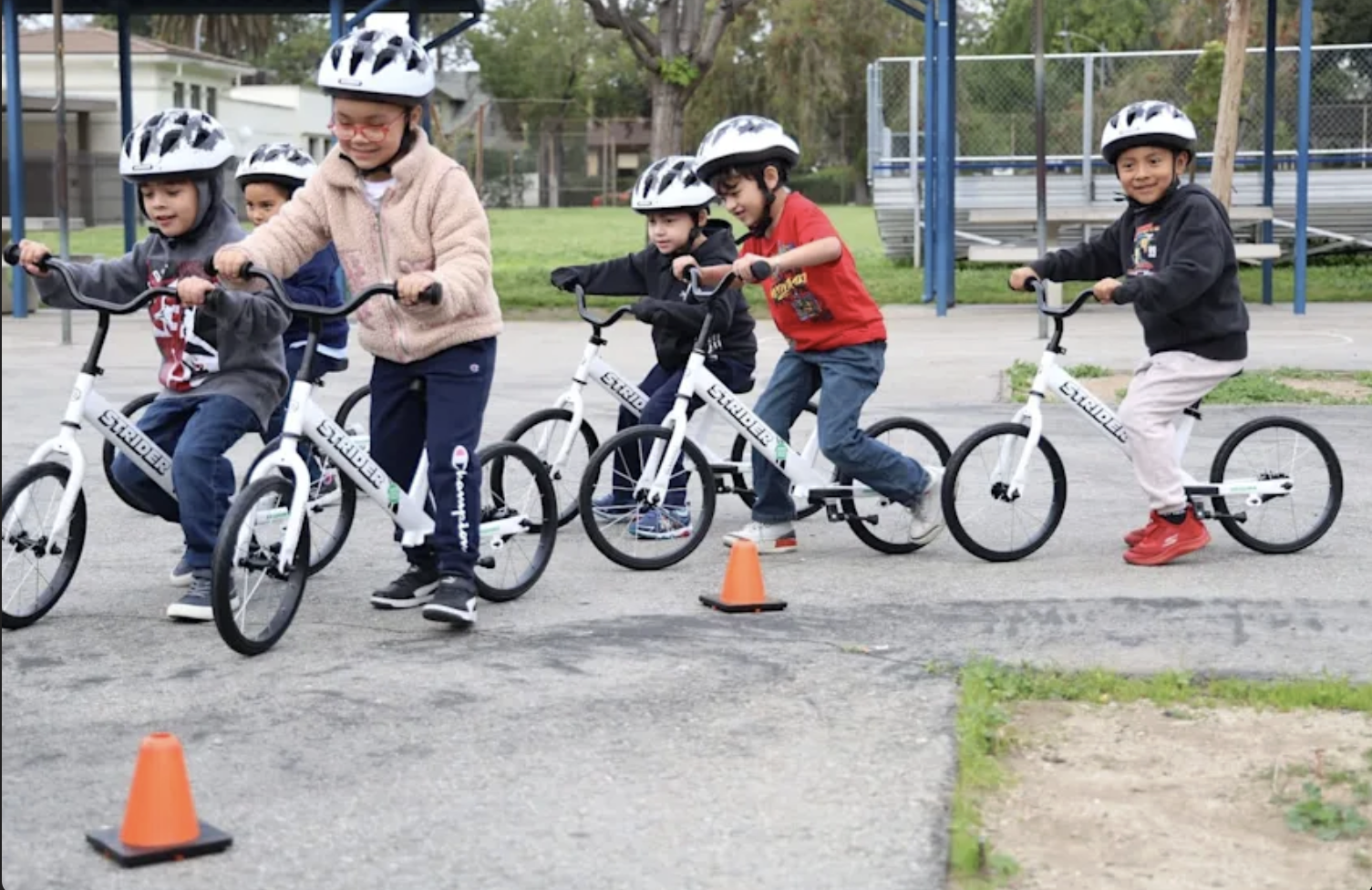
Kindergartners in a new California physical education pilot program, Learn-to-Ride, maneuver on pedal-less bicycles as they work on their balance. While kindergarten physical education has been traditionally focused on exploring movement and listening to directions, the new program administered by the nonprofit All Kids Bike, is taking a new approach by teaching Kindergarteners a concrete skill that helps them explore their neighborhoods and community.