
















Week 340
It's week 340 and we are thinking about the role of standards in education and what happens when we ...

Jump to: Top Tasks | From the Field | Key Resources | Moments of Resilience
It’s week 340 and we are thinking about the role of standards in education and what happens when we lose them.
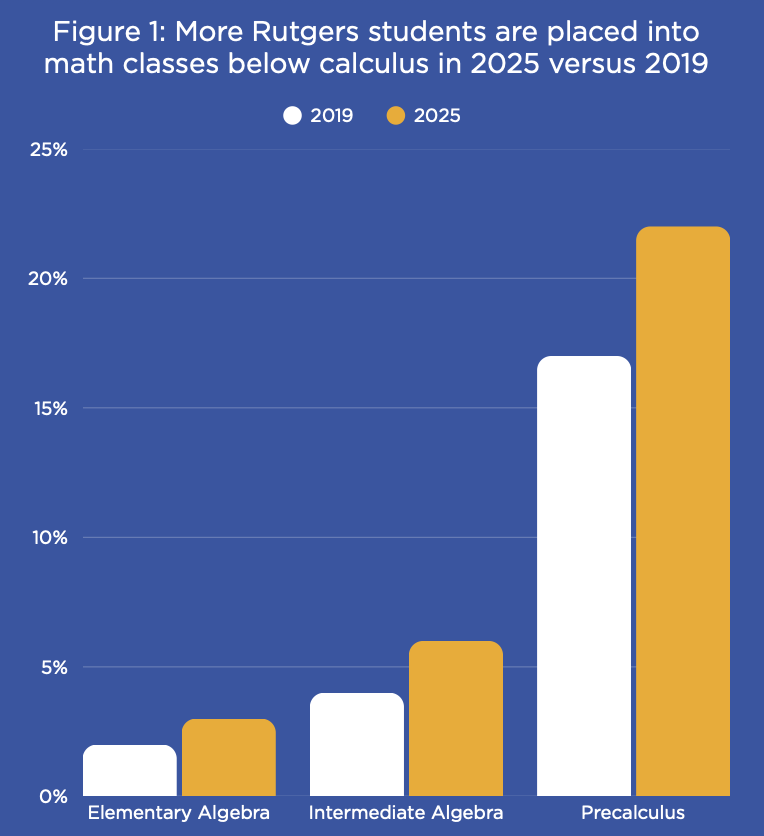
“Officially, New Jersey requires students to pass algebra, geometry and at least one more math class to earn a high school diploma,” Chad Aldeman writes in The 74. “Yet even as state officials celebrate a record-high 91.8% graduation rate, 40% of this year’s graduates failed to pass the state’s high school math exam last year.” Aldeman argues that one reason for this growing gap is that “New Jersey has spent the last decade lowering K-12 standards … For example, New Jersey has created alternative ways for students to satisfy its graduation requirements, including substitute exams with passing scores below the benchmarks for college readiness on admissions tests. A student can satisfy New Jersey’s math graduation requirement with a 17 on the ACT, for example, even though ACT sets college readiness at a 22.”
What does this mean for students? One consequence is students who think they are ready for college material find out they are unprepared. “That can lead to a rude awakening for some students,” Aldeman reports. “Rutgers math professor Steve Safran told me that on the first day of his accelerated precalculus course, a majority of students said they had taken precalculus or calculus in high school. Many had earned As and Bs, and were dismayed at being asked to study the same material again. Another Rutgers instructor told me that some students arrive unable to add fractions without a calculator and become lost as soon as a problem introduces a variable.” The result is that middle school and high school level math are being retaught to college students who never mastered the concepts.
Unfortunately, New York seems to be following New Jersey’s lead in removing standards from its education system. “New York’s Board of Regents voted Monday to press ahead with sweeping changes to graduation requirements, even as state officials acknowledged that key questions about the transition remain unresolved,” Alex Zimmerman reports for Chalkbeat. “Under the state’s timeline, current high school seniors will be the last graduating class subject to the state’s current Regents exam requirements.”
Here is what EdTrust-New York had to say about the changes in an Op-Ed in The 74: “The Board of Regents took another dangerous step this week: one that could leave New York’s 1 million high school and middle school students less prepared for college and the workforce … Now is not the time for New York to weaken the state’s only objective measure of high school readiness.” As they fight back against these unwise changes, they deserve our full support.
For a bracing depiction of what a loss of standards has meant for a child going through the New York City system, make sure to make time to read Nikole Hannah-Jones’ piece published in the New York Times over the weekend. Hannah-Jones writes on how poorly served her 16-year-old daughter was by her public school: “I enrolled Najya in algebra tutoring. After an assessment, the center’s director called me in and told me that Najya knew very little algebra and had huge gaps in many of the building blocks of math that she should have learned in elementary school, like mastery of long division and fractions.” Hannah-Jones had the resources to make up for the low standards of her daughter’s school. Most NYC parents do not. It is these parents who need schools with consistently high standards the most.
As President George W. Bush famously said in words that are as true today as they were when they were first spoken back in 1999: “Some say it is unfair to hold disadvantaged children to rigorous standards. I say it is discrimination to require anything less, the soft bigotry of low expectations.”
Last time, in the New Reality Roundup, we checked in with OhioKidsCAN after their education symposium with legislators and looked at some emerging, career-education bright spots from around the country. This week, we look at how underenrollment is affecting New York City, as a potential bellwether for the nation, and examine a challenge in the implementation of CTE programs: static educator knowledge in a dynamic age.
Avoid New York’s self-inflicted fiscal crisis
The Big Apple has a big enrollment problem. And given other choices the state and district have made, from holding schools harmless for lower enrollment to the small-class-size mandate from Albany, it’s becoming a fiscal problem as well.
“New city data shows there are 219 schools with fewer than 200 students, and the number of these tiny schools has been rising,” writes Jessica Gould for Gothamist. “About a dozen are in District 16, which includes Bed-Stuy. Overall, Northeast Brooklyn, Upper Manhattan and the South Bronx have especially high concentrations of small schools, making them the next potential battlegrounds over school closures or mergers.”
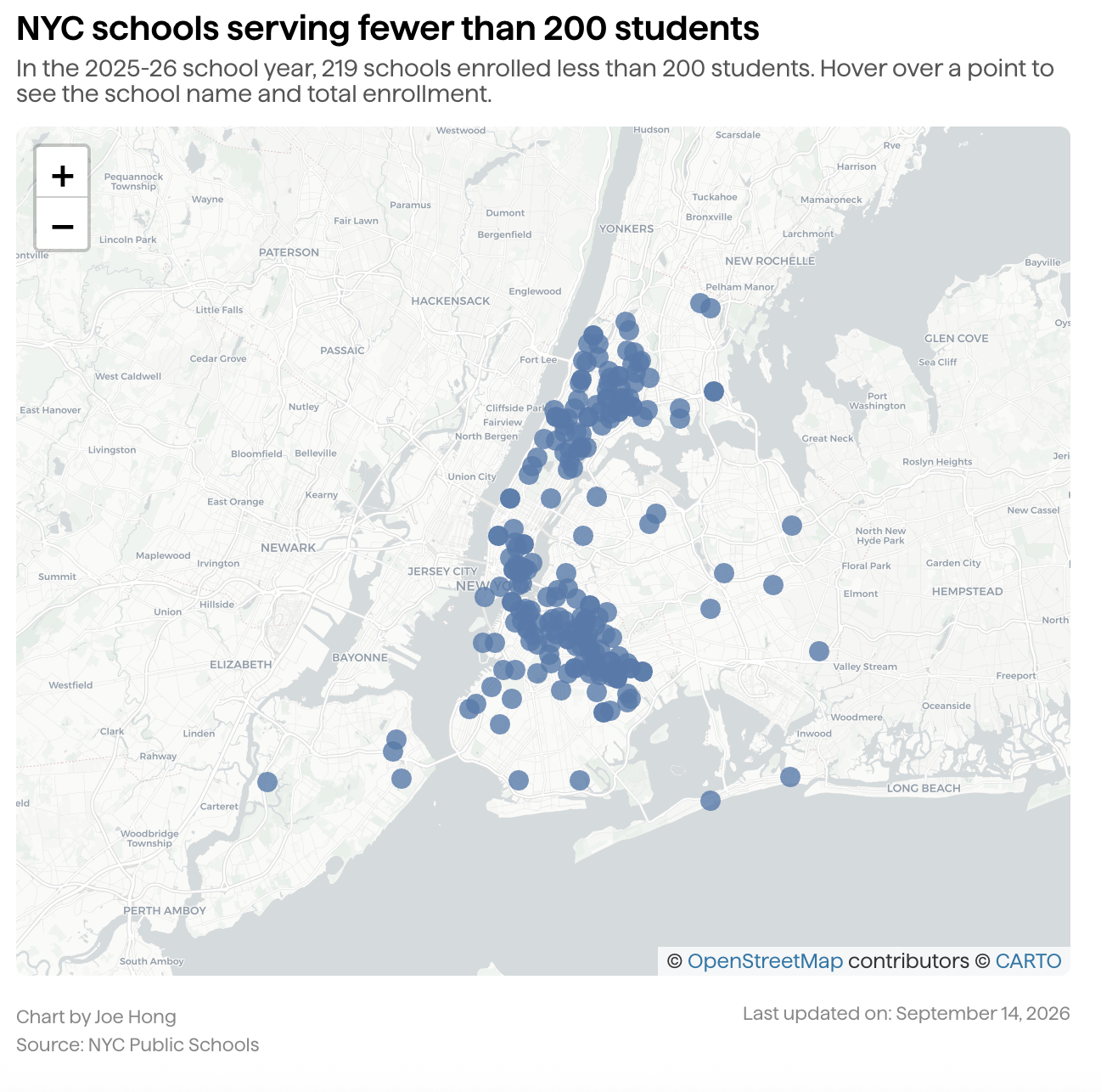
It would make sense that the early fiscal cracks would appear most prominently in New York City, with per pupil expenditures already cresting over $40,000. As 50CAN William E. Simon Policy Fellow Danyela Egorov has chronicled, New York’s enrollment crisis is deepened by two factors. First, a poorly conceived class size reduction law that caps classrooms at 20 to 25 students. Mayor Zohran Mamdani has spent $450 million on teacher hiring to meet the mandate and plans on spending an additional $1 billion. Second, there’s the city’s “Hold Harmless” provision, which divorces school funding from student enrollment, locking in pre-pandemic funding amounts no matter how many students they lose.
What’s being done to address the problem? Among New York’s elected and appointed leaders, there’s plans for a lot of meetings and tried-and-true rhetoric signaling that they’re going to approach budgetary decisions with the community rather than making decisions for the community, but NeQuan McLean, president of the District 16 Community Education Council, lays out the reality: “We really understand that we’re going to have to close schools, we’re going to have to merge schools.”
Danyela Egorov greets the city beginning to take the enrollment crisis seriously as a positive step forward. “New York City has the catastrophic situation of declining enrollment while at the same time massive increase in educational spending. I haven’t been quiet about this in the media and in conversations with district leaders. An adjustment is inevitable. I’m glad they’re beginning to see it,” Danyela shared.
Take action on CTE program quality by skilling up educators and building accountability
Both the number of career programs and students enrolling in them have surged since the Covid-19 pandemic, with AdvanceCTE noting that over 11 million kids are now enrolled in programs across the country.
As EdWeek points out, however, “that also means a massive struggle to recruit more specialized educators, or tap existing teachers to earn new certifications, particularly in the fastest-growing areas of healthcare, advanced manufacturing and information technology (including artificial intelligence).”
Across the country, districts’ CTE leaders are trying to confront the challenge. “Technology and engineering just move a lot faster than we do in education,” Aaron Williams, Kenosha, Wisconsin’s CTE coordinator, told EdWeek. “When we look at career and technical programming, we’re slow at moving big systems. We have to focus on teaching the essence of industries and then just sprinkle in the things that are moving forward as we can.”
In other words, with the explosive growth of these programs, the number of people who can successfully train the next generation is being diluted across a growing number of programs. This has led some leaders to argue that an entirely new approach is going to be more effective: outsourcing CTE from schools to employers. “The biggest challenge [in career education] is always that people with the most relevant experience and skills in an industry can make more money outside of teaching,” the superintendent of California’s Cajun Valley School District told EdWeek. “It doesn’t make sense to ask most people who are successful in industry to give up what they’re doing to make a percentage of their private industry salary to be in public education. So we rely on industry and business to do the teaching.”
Assessing the quality is also important, John Arnold of Arnold Ventures argues in a new opinion piece for the Wall Street Journal. The solution, for Arnold, is infusing the system with accountability, including outcomes-based contracting. “What is scalable to other job training is the rigorous accountability of sector programs. Federal, state and local governments have created a plethora of overlapping and disconnected job-training initiatives—a nonsystem destined to produce nonresults. What this mess of programs needs is a set of clear and ambitious standards, incentives to meet them, and consequences for falling short. When Arnold Ventures reviewed all states’ official 2024 plans for job training through the main federally funded workforce system, the Workforce Innovation and Opportunity Act, we found only 13 that included explicit minimum criteria for wage outcomes. In effect, programs can keep getting funded even if their participants stay in or near poverty after they finish.
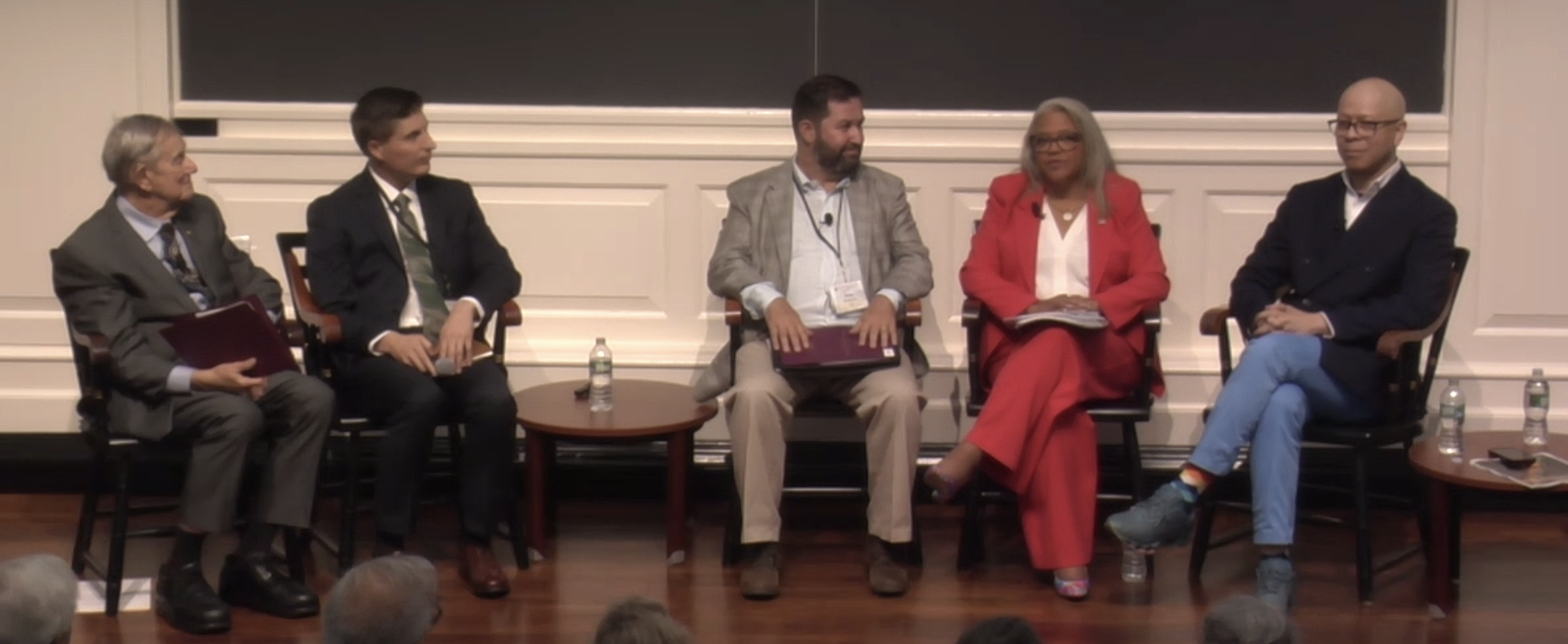
50CAN President Derrell Bradford participated in a civil debate at the Harvard Kennedy School with Ed3‘s Greg Nadeau and Kim Anderson, executive director of the NEA, over new emerging school models and the federal education tax credit. The panel was moderated by Harvard‘s Paul Peterson and UT Austin‘s Daniel Hamlin. In his remarks, Derrell actively encouraged Anderson and the union to set up their own SGO that would reflect their own vision for schooling in America.
Meanwhile, 50CAN’s Marc Porter Magee presented last week to a gathering organized by Opportunity 180 and the Las Vegas Chamber of Commerce, where he was joined by Lindsay Fryer and Roberto Rodriguez in a discussion about the impact of federal policy changes on the future of state-level innovation in career pathways.
And across the network, executive directors are huddling with Executive Vice President Jonanathan Nikkila and Vice President of Policy Liz Cohen as they work to set their legislative goals and strategy for 2027. “In the conversations we’ve had so far, I’ve been struck by the breadth of policies that states are working on. It isn’t just one area that’s trending in the sector, but they’re approaching goal setting from a baseline of trying to create as many educational opportunities as possible for kids,” Liz previews. “No one is assuming that what worked yesterday is what’s definitely going to work tomorrow.”
Students at microschools are progressing at the same rate on i-Ready assessments as public school students nationwide, despite serving a much higher population of students with learning needs, writes Linda Jacobson for The 74.
Research from AEI indicates that low-income students are only half as likely to play varsity sports as their higher-income peers, and all students were significantly more likely to play sports when enrolled in smaller schools.
Bell-to-bell cell phone bans are working, writes Brookings in a new report based on a survey of US teens.
A new Fordham survey of 1,100 high school students finds that illicit tech use is rampant and the prevalence of AI use is undermining both learning and the high school experience.
Urban Institute released the Education-to-Workforce Framework data tool, compiling data from all 50 states on the effectiveness of workforce programs, from career pathways to college enrollment to financial aid.
Middle school students at PS/IS206 in Brooklyn, New York have launched their own student newspaper, The Lamb Lantern, with the help of Press Pass NYC, a nonprofit working to restore vanishing student newsrooms. In an opinion piece for The 74, Press Pass Executive Director Beth Fertig shares how student newspapers build critical skills for students’ futures.