









Week 316
It is week 316 and we are thinking about the importance of transparency in our goal of making eviden...

Jump to: Top Tasks | From the Field | Key Resources | Moments of Resilience
It is week 316 and we are thinking about the importance of transparency in our goal of making evidence-based decisions on behalf of kids.
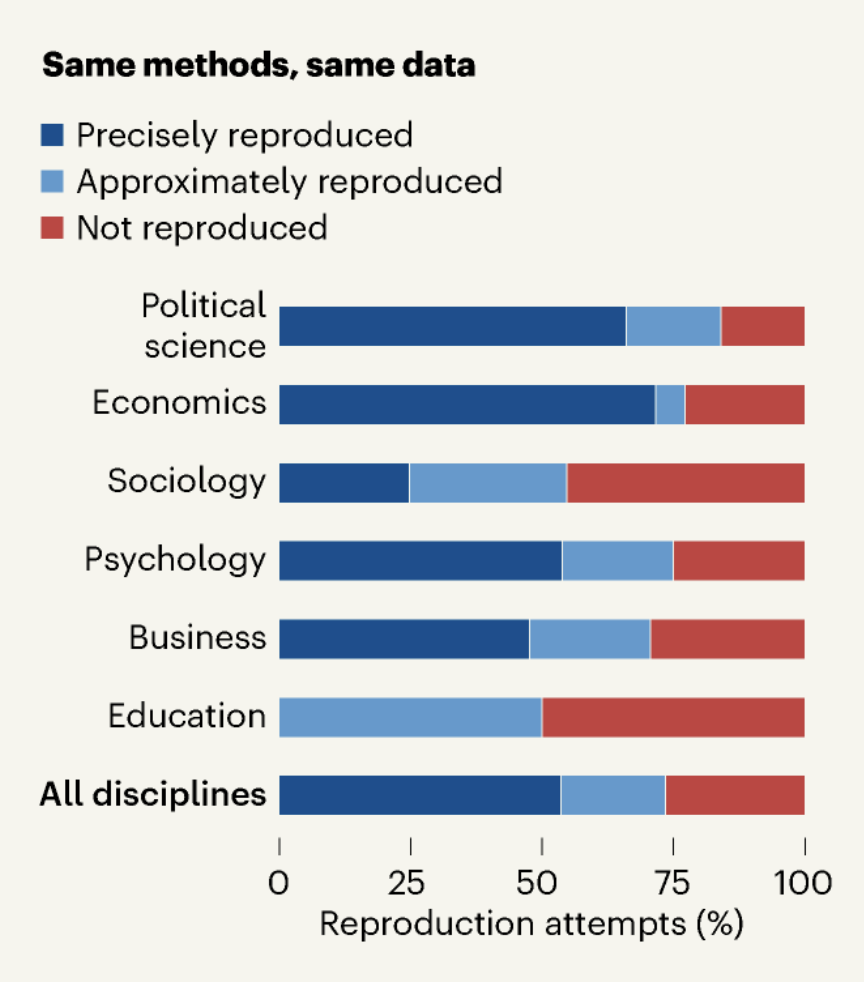
“A massive seven-year project exploring 3,900 social-science papers has ended with a disturbing finding: researchers could replicate the results of only half of the studies that they tested,” Nicola Jones writes in Nature. The project explored three ways to put these studies to the test:
Reproducibility “should be the easy one,” Kyle Saunders, a professor of political science at Colorado State University, writes in his roundup of the results. “It’s literally just: does the math check out?” And yet not a single education study met that standard, by far the worst result of any discipline.
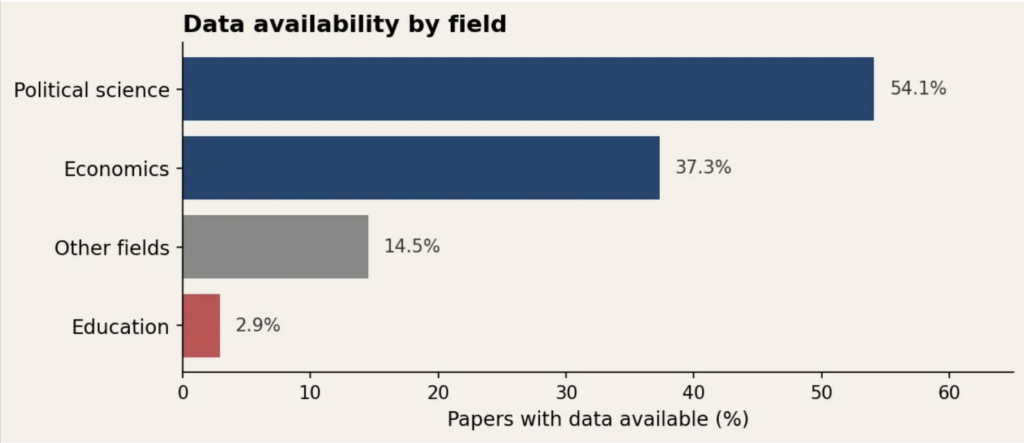
Saunders observes that “the fields with the worst reproducibility numbers are the ones with the weakest infrastructure for transparency. Sociology. Education. Parts of psychology … The incentives that produce non-reproducible science are the same incentives that resist reform. Publish or perish rewards volume over transparency. Journals want novel findings, not careful replications. Tenure committees count publications, not data deposits.”
Here is how Gustav Nilsonne, one of the co-authors on all three papers, put it: “This shows that transparency is key to achieving credible research results. Sharing research data enables outsiders to assess which results are reliable.”
There is a lot of work to do among the academic departments producing these studies, but what does it mean for the rest of us who don’t work in academia?
One thing we can all do is embrace the spirit of transparency in all the parts of the work we own. For example, in far too many cases, education nonprofits that commission surveys only publish the results that confirm their previous views through a selective release of the toplines. This is something we have aimed to avoid in our State of Educational Opportunity in America survey by not only releasing the full topline results of every question asked but also by making the entire dataset publicly available so others can do their own analysis and check our math. It’s a simple thing we all could be doing in all of the surveys we fund.
For those in the ed reform community that directly fund education research, we can also insist that the full data from this research be made available for reproduction in alignment with the best data practices of the top political science and economics journals. This will not only help the field catch mistakes but deter the kind of cherrypicking of results that slow down the pace of progress in discovering what actually works.
Finally, we should shy away from making policy based on novel findings from single studies, particularly when published in education journals that lack high standards for data transparency. Education is a complicated field and the findings of any one study can be influenced by a host of factors that may not allow it to be generalized to most places or educational environments. We should have a much higher bar for saying “this is what the research says.” Only after repeated, careful reproduction and replication of a finding should we give it that kind of label. Along the way, we should aim to reality check ideas against what we are finding in our own schools and environments.
Last time in the New Reality Roundup, we discussed a new approach to consider our network’s impact and checked in on legislative sessions from the south to the northeast. Today, we take stock of learning loss six years after Covid-19 developed into a global pandemic and hear GeorgiaCAN Executive Director Michael O’Sullivan’s reflections after the 2026 legislative session.
“Sea changes are rare in the history of American education, and the combination of unprecedented enrollment declines and declines in student achievement will continue to shake up the American education system long after the pandemic is over,” we wrote in June of 2021, a year into the pandemic, with school closures ongoing in many states and districts. Now, six years after the national emergency that fundamentally changed the American education landscape, a pair of pieces in the 74 Million suggest a continued effect on an entire generation of students.
Emily Tate Sullivan reports on a new analysis from assessment provider NWEA that focuses on a student subgroup not often discussed: the children who were in diapers when the pandemic hit and are now in the early grades of elementary school. “While kindergarten achievement levels in math and reading largely held steady during and since the pandemic, by first and second grade, students are performing below pre-pandemic averages,” Sullivan writes. “In math, at least, first and second graders have shown slow, incremental progress. Gaps in reading achievement, however, seem stubbornly stalled.”
NWEA’s Megan Kuhfeld pointed out to Sullivan that chronic absenteeism rates are higher in Kindergarten, and this loss in instructional time may be slowing down children’s progress once they are in school.
“And many kindergarten teachers have reported that students are showing up with more nascent social and emotional skills than their peers in prior years,” Sullivan notes. “They have less experience with important life skills such as sharing, cooperating and self-regulating.”
Meanwhile, “inequalities in learning between high-achieving students and their lower-performing classmates have grown dramatically,” writes Kevin Mahnken, reporting on a new study at EdWorkingPapers from M. Danish Shakeel, Misty Gallo and Patrick J. Wolf that examines the worsening achievement gap nationwide.
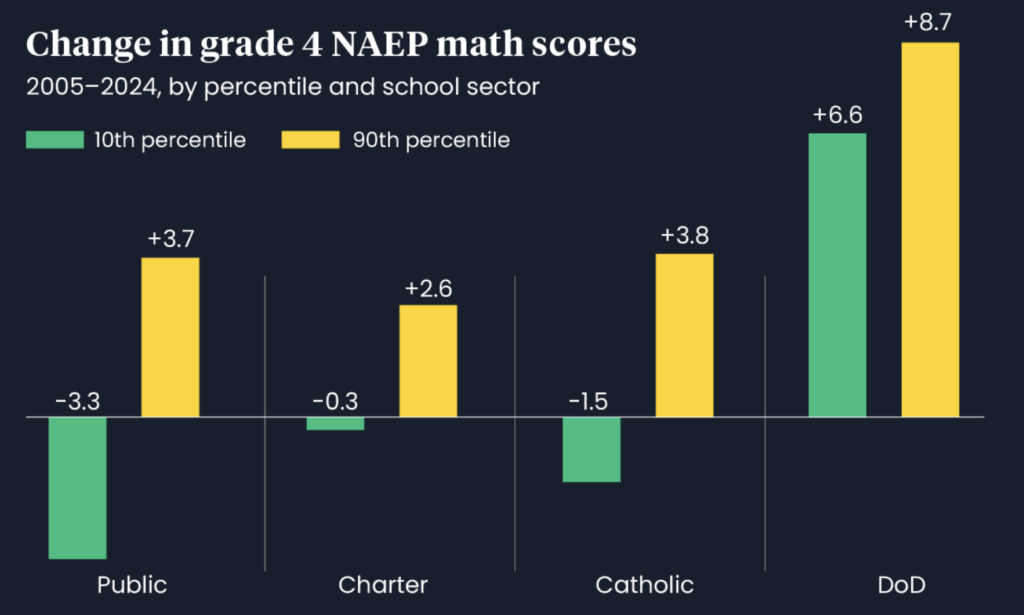
Here’s how Mahnken describes the bottom line: “The already-substantial gap between the most advanced and most challenged fourth graders expanded by 1.3 years’ worth of learning gains between the Bush administration and the Biden administration. For eighth graders, the gap grew by one-half year of learning in both subjects over the same time period.”
This is part of a pattern noted by Chad Aldeman that, across a whole host of measures, “The bottom is falling, and the top is either staying the same or even rising a bit.” Aldeman concludes: “The story here isn’t just falling scores. It’s divergence. Some students are engaged in school and out of it. They’re busy. They’re studying, practicing, competing, and participating. They’re doing more, not less. But the students at the bottom look very different. They have less structure, fewer commitments, and fewer demands on their time. That’s the gap that matters.”
“The day after session ends, I like to try to take stock of what we actually changed. What’s different for kids and families as a result of our advocacy? How did we make their lives better?” GeorgiaCAN Executive Director Michael O’Sullivan said as he reflected on his team’s work after a busy last night at the Capitol. Here’s some things that, with the Governor’s signature, will be different in Georgia now that the 2026 legislative session has come to a close:
“A year that we can make progress on literacy, math and legislation to curb the distraction of screens–one that I think will be a model for other states–-that’s a solid year,” Michael says, while acknowledging how much more needs to be done. “I’m frustrated we weren’t able to get all of our priority bills through, especially our legislation to grow the appropriation for charter schools. The entire team put in a lot of work on this one, so to see it clear all the committees, and then just not get brought up for a vote, while we’re waiting until time has run out and session has drawn to a close? That was hard.” After resting up from an intense session, Michael and the team will be getting back to work to ensure all the new policies are effectively implemented and begin strategizing on their policy campaigns for next year.
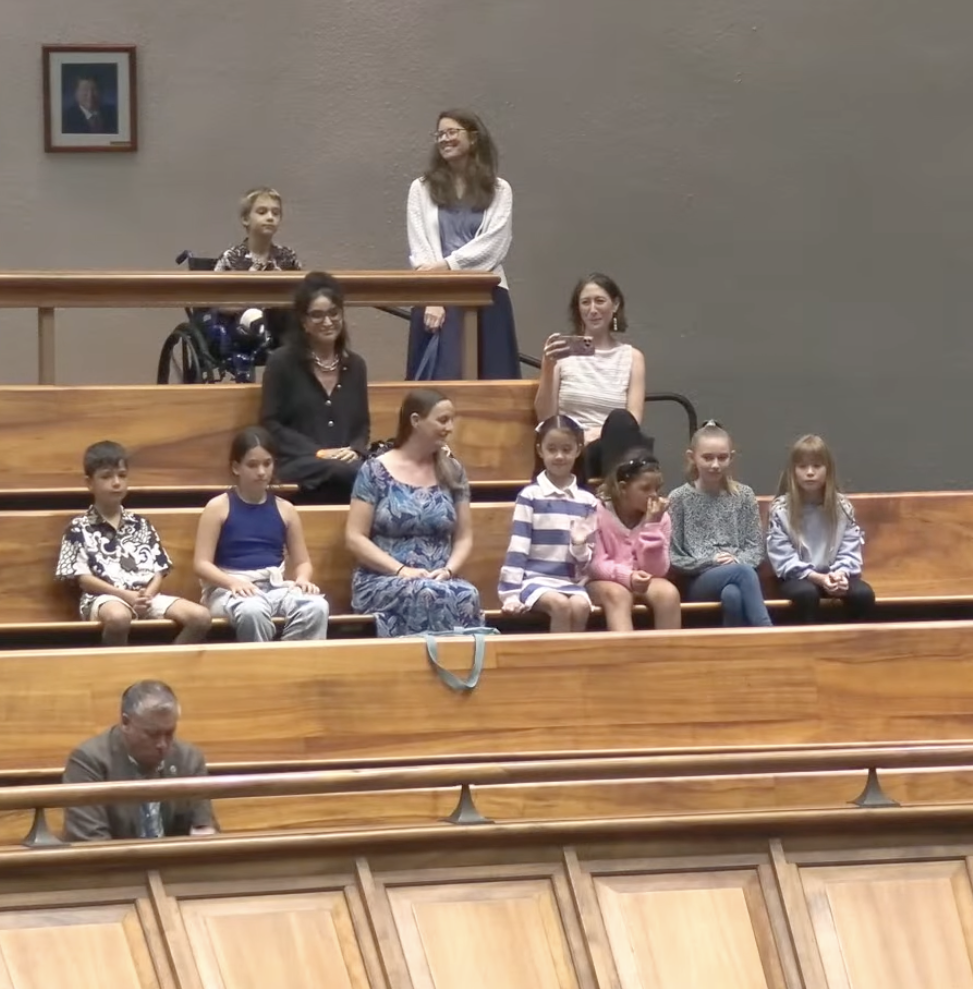
Student advocates testifying in support of HawaiiKidsCAN’s literacy bill made such an effective impression on legislators that they received a special call out from the senate floor. Senate Education Committee Chair Donna Mercado Kim said, “I have to admit, the students that came to testify, they were excellent, they were articulate, they knew their stuff–some didn’t even have notes. They testified better than some adults that have come before our committee. I want to acknowledge their good work.” The bill continues to advance, thanks in large part to the powerful advocacy of these youth.
Transform Education Now got around the first major hurdle for their ballot measure to create alternative pathways for charter authorization, and the team is preparing for a major signature drive in the weeks ahead.
ConnCAN spent last week closely following a half dozen bills in anticipation of last Thursday’s Appropriations and Finance Committee budget deadline, including a bill providing $5 million for high-dosage tutoring and another that will provide $4.5 million for literacy coaches throughout the state. Both bills successfully worked their way through appropriations last week and head to the floor for a full vote.
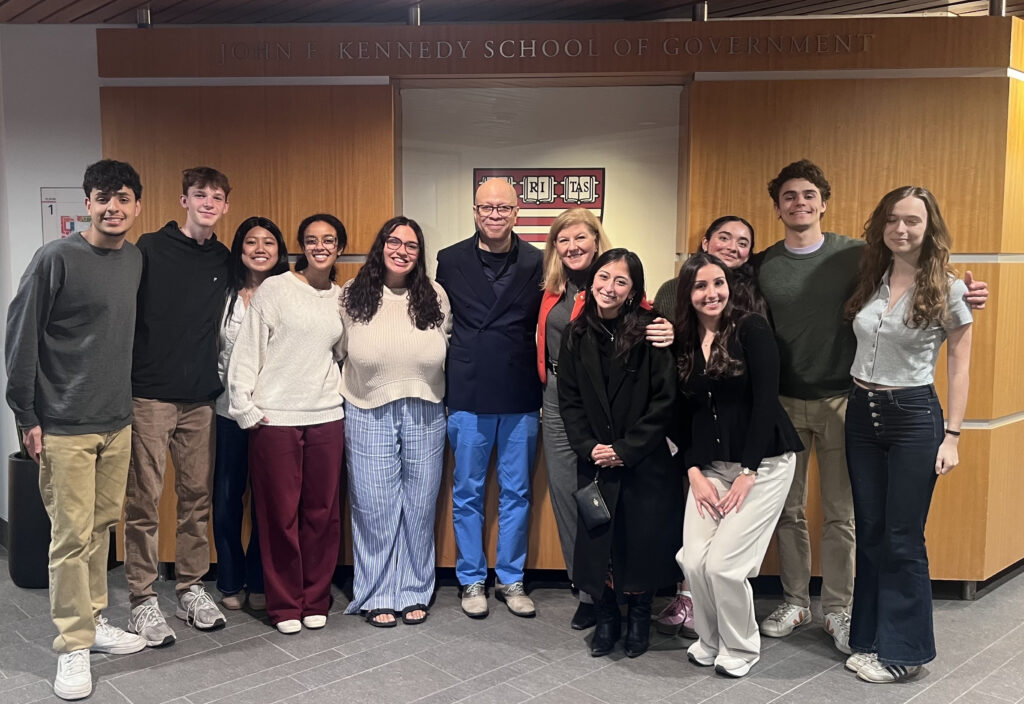
Derrell Bradford participated in a study group at the Kennedy School’s Institute on Politics with former Virginia Secretary of Education Aimee Rogstad Guidera.
 A new survey from Brookings shows a significant drop in working conditions for teachers, across more than a dozen separate indicators.
Examining three districts in Arizona, Michigan and Iowa, New America models an approach where redrawing district boundary lines could result in a major leveling of the playing field.
Students living within a mile of an alternative school have a 28% increase in likelihood of enrolling, according to new research from Farah Mallah, Nour Abdul-Razzak and Monica Bhatt at EdWorkingPapers.
 For AEI, Robert Pondiscio argues that education fads develop because of structural forces that encourage constant change instead of stability when ideas are found that work.
 Jill Hoppe, at Fordham, advocates for universal access and expansion of music education programs. The 50CAN Educational Opportunity survey found that 61% of A students are enrolled in art, compared to only 26% of D and F students.
 At EdWorkingPapers, researchers Kenneth A. Shores and Hojung Lee preview a chapter of an upcoming book, giving a comprehensive look at K-12 school finance.
 On Wednesday, April 22, Urban Institute will host an event on scaling apprenticeship programs in small and medium businesses.
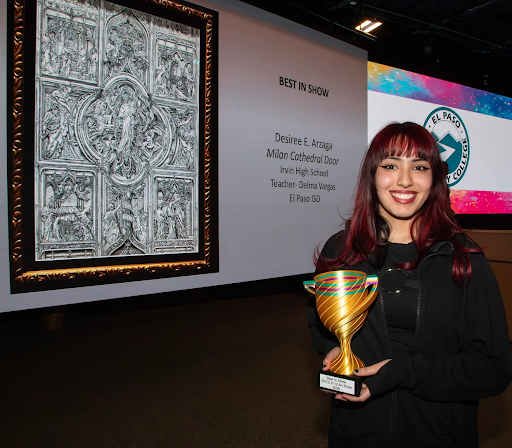
High school junior Desiree Arzaga holds up her “Best in Show” trophy at the El Paso K-12 Art Exhibition Awards that she received for her piece, “Milan Cathedral Door.” The second edition of the Educational Opportunity Survey found an 18 percentage point gap between low- and high-income students in arts program participation, and the arts exhibition was designed to address that gap by encouraging creative expression in youth. The El Paso Times has more.