















Week 314
It is week 314 and we are thinking about what it takes to ground our work in evidence of impact.

Jump to: Top Tasks | From the Field | Key Resources | Moments of Resilience
“The best advocates are great listeners,” we wrote back in 2017 in The 50CAN Guide to Building Advocacy Campaigns. “What don’t you know that others could teach you? Who can help you broaden your thinking? Who in your community is touched by the issue you are working on? We have found that before choosing your goals, it is best to go on a listening tour.”
That’s the spirit we have always strived to bring to our work and it’s the reason why we were excited to return to our 50-state survey project for a second edition. This time we spoke to 23,000 parents about all the educational opportunities in their children’s lives as well as the potential obstacles in their way and got their take on all the big policies under debate from tutoring to ESAs to raises for teachers.
Where can all this data lead us? It’s clear that the educational opportunities that matter–from finding the right school to getting access to a tutor to securing a career pathway for your child–are not available for all. I told The 74’s Greg Toppo in his comprehensive coverage of these results that we hope the survey will help us all better answer the question: “How would you create the public systems to make a more equal world, where all of those opportunities are available to everyone? That’s what we’re trying to do, and what the survey is helping us track.” It’s an ambitious goal but we hope the survey can serve as one more step forward toward our shared vision of what’s possible.
Last time in the New Reality Roundup, we looked at new research from the University of Notre Dame on how children learn math and the lack of correlation between student achievement and educator master’s degrees. This week, we take a look at reactions to the survey from across the education sector and speak with Amanda Aragon on two big legislative wins. Plus: an Olympic Moment of Resilience.
Dig into the reactions to the 2nd Edition of the Education Opportunity Survey
This week, we released the second edition of The State of Educational Opportunity in America, our 50-state survey of 23,000 parents conducted in partnership with Edge Research. The 275-page report is among the largest state-by-state examinations of how parents perceive the education landscape, covering everything from school satisfaction and tutoring participation to AI usage, mental health support, and college and career readiness.
We hope that the survey can serve as a common resource in our shared effort to create education systems that provide all children with the educational opportunities they deserve. That’s why we have been thrilled to see so many changemakers digging into the results.
Kevin Huffman, CEO of Accelerate, zeroed in on the tutoring findings. “The most popular policy in education is: free tutoring for K-12 students who are behind grade level,” Huffman writes. “60% strongly agree, 86% agree/strongly agree. Bipartisan. Across states. Cut it however you want. The people want this.” But Huffman’s analysis goes further than popularity. He notes that individual tutoring delivery is going up, not down, even in the post-ESSER funding environment, and that the income gap for kids receiving tutoring is closing. “It is still the case (barely) that wealthier kids get more tutoring than poor kids,” he writes, “but the gap is narrowing. Scaling in-school tutoring for high-need kids is having an impact.” Karen Vaites echoed the point, noting that one in four U.S. students has received tutoring in the last year and that participation among low-income families was higher than she’d expected, a tangible benefit, she said, of the national tutoring push.
Huffman also highlights the connection between state action and public support: in 10 of the 11 states that have received state grants from Accelerate to build out tutoring initiatives, parent support for tutoring is even higher than the national average. “No matter which direction the causality points on that fact,” Huffman concludes, “it’s good news that places trying to do more tutoring have even more public support.”
Sean Gill noted that the survey’s new questions on parental support of educational policies should be a wake-up call for advocates on the breadth of opportunities that parents want. “ESAs are extremely popular with parents, but so are summer camp, tutoring and open enrollment,” he writes. Districts that think about choice as an outreach and financial opportunity rather than an existential threat, Gill argues, will be at an advantage.
Winward Academy’s Thomas O’Brien described the report as “absolutely jam-packed with serious data” that “lands at a moment when K–12 schools are under pressure from every direction.” O’Brien was particularly drawn to the charts breaking down how parents prioritize “high academic standards” versus “strong education in life skills” because the data reveals how important a family’s vision of what school should be is to the whole educational landscape. Meanwhile, Yiatin Chu dug into the testing data, finding that while testing’s favorability may look modest at first glance, a more nuanced picture emerges in the crosstabs: support is notably higher among parents with high school degrees, parents with postgraduate degrees, high-income parents, urban parents and parents of English Language Learners. And Colyn Ritter surfaced a finding about microschools: nearly half of microschool parents report being extremely confident that they have a clear understanding of how well their child is achieving academically, which is significantly higher than in traditional public schools.
This is exactly why we built the survey the way we did. The data is designed to be used by advocates seeking to better understand the parents in their states, by researchers looking for new insights into educational trends, and by journalists writing stories that go deeper than national averages. The full report, the interactive Data Explorer, and the complete dataset are all available at 50can.org/education-opportunity-survey.
We hope you’ll join the 50CAN team and Edge Research’s Pam Loeb tomorrow afternoon from 3pm-4pm ET for a special briefing of the results and how you can use these tools to answer the questions that matter most to you.
“Gradually and then all at once,” NewMexicoKidsCAN Executive Director Amanda Aragon shared with a smile as she reflected on the multi-year path that resulted in a pair of victories in the final week of the 2026 legislative session. “We knew New Mexico needed to address math and literacy. It has taken years and it feels so rewarding to make big progress on both in the same session.”
The NewMexicoKidsCAN team and their partners secured passage of two bills, one for math and one for literacy:
“This is why long-term local advocacy leadership is so critical. I’ve seen a couple of cycles now where the first time a bill is introduced there’s a period of testing the water, of having legislators explore the ideas. Most of the time, particularly in a state like New Mexico with a short session, legislators will need time to deepen their understanding and commit to changes. By showing up year after year–that persistence can lead to results,” Amanda reflects.
Amanda and her team spent the summer and fall 2025 debriefing the previous year’s advocacy campaigns and planning for a mixture of strategies and tactics that would get these ideas across the finish line. “We thought through every opportunity we could to share what’s happening in other states, on both math and literacy,” Amanda noted. That included bringing Louisiana Kids Matter Executive Director Kelli Bottger and Louisiana State Senator Patrick McMath to Albuquerque to speak with community leaders on the success of their tutoring and literacy work, and partnering with the Greater Albuquerque Chamber of Commerce on an event featuring former Mississippi Superintendent Carey Wright. It also included hundreds of conversations with electeds on New Mexico’s achievement and comparisons to other states.
Especially on the math bill, victory was born out of intensive collaboration. “I’m really thankful to the partners that NewMexicoKidsCAN worked on to get these changes done,” Amanda said, “Excel in Ed, in particular, were critical partners for the math work. They provided expertise on bill language and Teach Plus fellows weighed in with powerful testimony and tons of work in the interim. Without our partners, this bill wouldn’t have happened.”
As part of the release of the State of Educational Opportunity in America survey, state CANs released local versions that speak to the unique insights from parents in their states. Take a deep dive into the State of Educational Opportunity in Colorado, Connecticut, Delaware, Georgia, Hawaii, Louisiana, New Jersey, New Mexico, North Carolina and Tennessee.
TennesseeCAN is first out of the media gate with coverage by the Tennessee Firefly, which published that “One of the key findings in the survey is that Tennessee ranks above the national average for parents who strongly favor charter schools (ranked 15th), open enrollment (ranked 15th), and higher teacher salaries (ranked 18th).”
HawaiiKidsCAN’s literacy bill received unanimous passage from the House Education Committee last week, after Executive Director David Miyashiro and Deputy Director Erica Nakanishi-Stanis spent three busy weeks meeting with legislators. The bill advances to the full House after a committee hearing that featured adorable student testimonials.
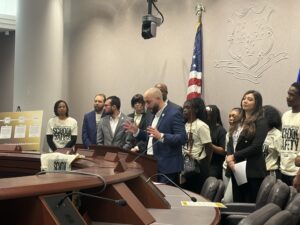
ConnCAN Director of Community Engagement and Family Partnerships Luis Ortiz testified, alongside the Connecticut Black and Brown Student Union, on educational opportunity, school discipline and reimagining school safety.
GeorgiaCAN is closely tracking the progress of six bills, all of which advanced through the legislative process last week. In addition, the team marked the first GeorgiaCAN Capitol Day of the year with their network of advocates, bringing parents and students to meet with legislators.
Education Next analyzes open enrollment data from 27 states and finds that Colorado (24%) , Washington DC (21%) and Delaware (19%) lead the country in the percentage of K-12 students who take advantage of open enrollment.
The 74 highlights a new Just Equations report praising five states–Georgia, California, Tennessee, Utah and Oregon–for better aligning high school and college math, with some seeing drops in the need for college remediation.
Fordham Institute compiles a Wonkathon anthology, bringing together policy experts from across the education landscape to answer the question: what needs to happen next for the science of reading revolution to fulfill its promise?
The Center for American Progress recommends state and federal policy actions to address cellphone use in schools, including phone-free school policies and embedding digital citizenship into the curriculum.
The Center for American Progress hosted a conversation with Rahm Emanuel on putting students before politics, where he makes the case for wide ranging education reform including treating standardized testing as “a friend not a foe.”
AEI proposes a framework for reconnecting the roughly 5.5 million “opportunity youth” who are neither in school nor working to earn-and-learn pathways.
New research at EdWorkingPapers finds that industry-recognized certifications earned in high school boost early career earnings by 9 percent, but only when aligned to a student’s CTE coursework.
New America examines how states are tackling the insurance and liability barriers that prevent schools and employers from scaling work-based learning programs for students.
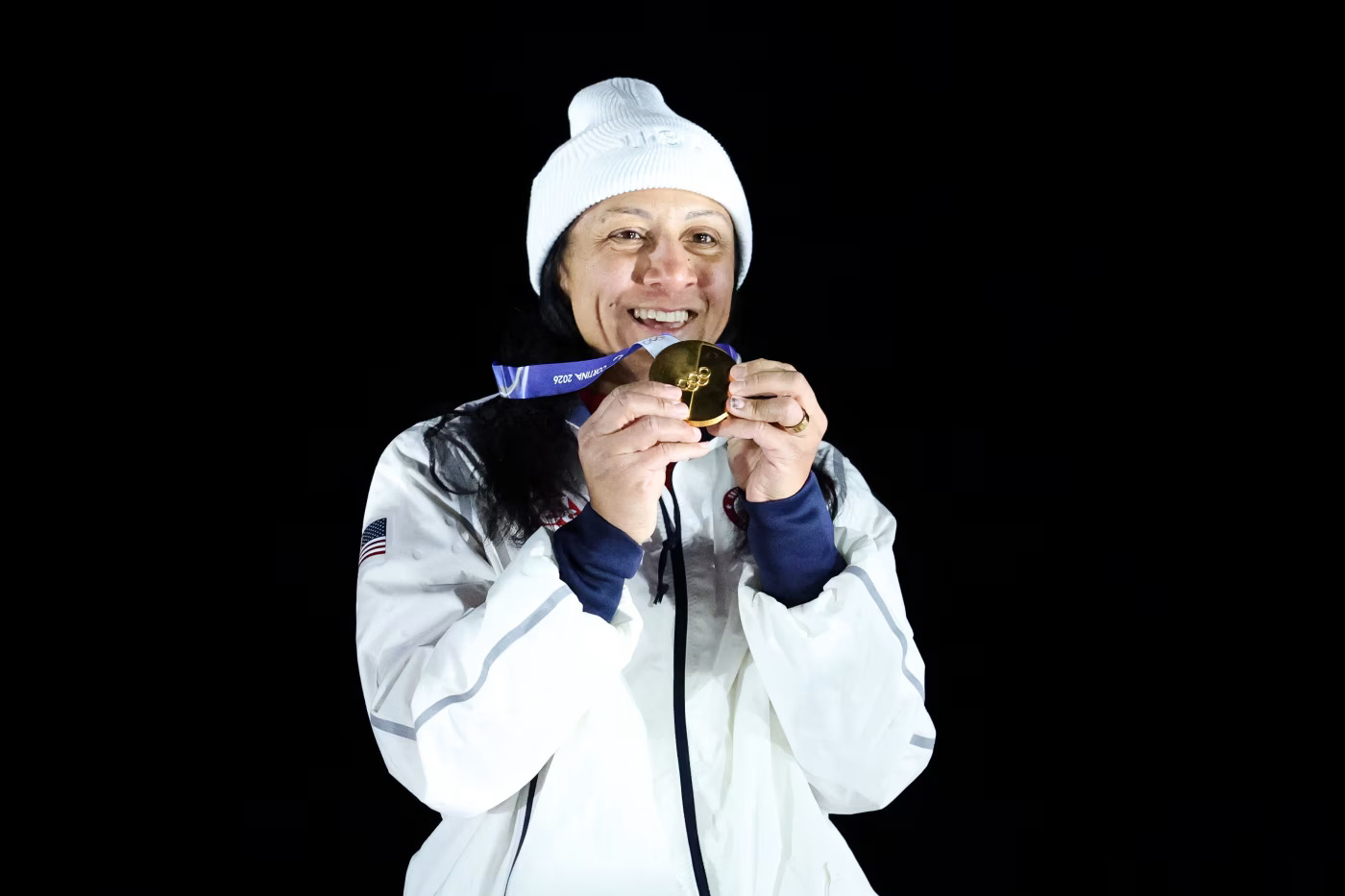
American Bobsledder and GeorgiaCAN EPIC Parent Fellow graduate Elena Meyers Taylor won the gold medal last week at the Milan Cortina Olympic Winter Games, marking the first time we’ve had a medalist Olympian in the CAN family. “Across four Olympics, Elana Meyers Taylor had come as close as humanly possible to Olympic gold without winning it,” the Wall Street Journal reports. “She’d competed in both two-woman bobsled and monobob. She’d racked up three silvers and two bronzes. More than once, she missed the top of the podium by fractions of a second. Then, in one thrilling minute on Monday night, her lifetime wait was suddenly over.” Congratulations, Elena!