













Week 314
It is week 314 and we are thinking about what it takes to ground our work in evidence of impact.

Jump to: Top Tasks | From the Field | Key Resources | Moments of Resilience
Happy National School Choice Week! We hope that you’ve checked out the events happening this week in your local community and are planning to head out to show your support.
Last week, we announced 57 goals for 2026 across the 50CAN network, with emerging themes of literacy implementation, reimagining math and continuing to scale and resource tutoring programs. Here at 50CAN we have had a lot of fun with Fantasy Football and are getting our Oscar ballots filled out so we thought we would contribute something to the genre: the first ever 50CAN policy wins prediction competition.
Here’s how it works: enter the competition by clicking below where you’ll be prompted, for each of our state goals this year, to predict whether the goal will result in a Win or a Loss. Make your selections and you will be automatically entered into the competition. At the end of the year, we’ll count them all up and announce a winner.
What do you win? The pride that comes from beating your fellow ed reformers. The winner will be celebrated in the last Roundup of 2026 but there will also be a fun prize! While we’ll leave you in suspense as to what that prize is until the end of the year, know that it’s significantly more fun than Derrell Bradford’s initial suggestion of a 50CAN-branded set of steak knives.
Last time in The New Reality Roundup, we previewed what’s in the cards for the biggest National School Choice Week yet and rounded up predictions for education in 2026. This week, we consider whether the definition of chronic absenteeism is too lenient and dive deeper into the leaders of our new state campaigns, Patricia from Battle Born Kids Matter and Amber from OhioKidsCAN.
Consider the consequences of chronic absenteeism
At Education Week, reporter Evie Blad covers a new longitudinal study of 9,000 Boston public school students that found that an absence rate of just 3% to 7% risked falling behind grade level in future years, a level significantly lower than the 10% rate where a student is considered chronically absent.
Evie catches us up on the stats: “Nationwide, 15% of students were chronically absent in 2018, according to the Return to Learn tracker maintained by the American Enterprise Institute. That number hit its peak in the 2021-22 school year, when 28% of students were chronically absent. Of the 41 states that have reported data from 2024-25, 34 have shown declining rates of chronic absenteeism, but none have returned to pre-pandemic levels, according to the tracker.”
Nat Malkus’ Return to Learn Tracker that Evie references has been following chronic absenteeism rates state-by-state and over time, and the most recent data from 2025 shows that while there is large variance based on state, at least 1 in 5 students are chronically absent across a majority of the country.
With four states–Iowa, Nevada, Delaware and Kentucky–showing year-over-year progress in reducing absenteeism, we caught up with DelawareKidsCAN Executive Director Britney Mumford and Battle Born Kids Matter’s Patricia Haddad Bennett to understand the levers that are working.
“Delaware set really clear goals on reducing chronic absenteeism as part of the Delaware School Climate Task Force. Three things to me are making an impact: the first is a data-driven intervention system that flags students who are at risk of chronic absenteeism, the second is a real focus on student mental health and social skills, and the third has been a targeted attempt to reduce out-of-school suspensions with alternative systems of discipline,” Britney shares.
“Across Nevada, there is a concerted effort to ensure students are in the classroom,” Patricia notes. “We know that kids cannot learn if they are not in school and we’ve seen throughout the state that leveraging strategies ranging from home visits to parent alerts works. But the most important long-term strategy is creating a school and classroom experience that incentivizes students to want to show up and the ability of schools to deliver a high-quality education that meets kids’ needs and keeps them engaged. Of particular note in Nevada is that both public district schools and the state’s charter schools are focused and motivated to take this challenge on and ensure every student shows up to school ready to fully participate in their education experience.”
The study suggests, according to lead researcher Tiffany Wu, that states have been too lenient in their definitions of chronic absenteeism, and while reduction under the current definition remains an important goal, policymakers should consider lowering the number of missed days for a student to be declared chronically absent so that the problem and solutions are better defined.
Get to know Amber and Patricia
Last week, Derrell Bradford announced that two new campaigns had joined the 50CAN network: Battle Born Kids Matter in Nevada and OhioKidsCAN in the Buckeye State. Today, we’re excited to introduce you to the leaders of these states as they share their motivations and aspirations:
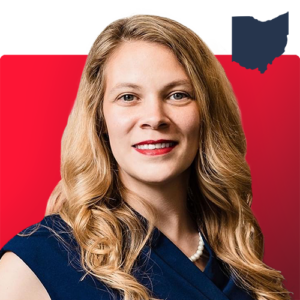

Amber, what is it about this particular moment, 2026 in Ohio, that made the timing right to launch OhioKidsCAN?
Amber: We’re seeing real momentum from two directions at once: there’s heavy grassroots engagement from parents and at the same time there’s real interest from both the legislature and potential new leadership coming into the governor’s office. It’s a perfect storm of people coming together where everyone is interested in doing something big here. We’re ready for it.
Is that similar or different to Nevada, Patricia, and the launch of Battle Born Kids Matter?
Patricia: We definitely see a throughline. Governor Lombardo and our legislature have prioritized education, from significantly increasing per pupil funding to ensuring those dollars are attached to accountability, and we’re looking forward to seeing next steps on implementation. We have a new State Superintendent who is also aligned on quality and accountability. Going into midterm elections and preparing for the 2027 legislative session, Nevada is positioned to give kids and educators the support they need to be successful. Battle Born Kids Matter will collaborate with our partners to build upon the momentum that’s been created. Access to opportunities and a high-bar of quality is what matters most. My hope is for Battle Born Kids Matter to be an accelerant at a time where there’s lots of opportunities to build.
What first sparked your interest in education policy and advocacy?
Patricia: I grew up in a working class household with a clear, focused understanding that education would open future doors to economic and social mobility. As a first generation college student, I found myself working at a research institute focused on preventing child abuse and neglect and realized the critical role a great teacher and welcoming school environment can play in supporting kids experiencing trauma. Optimistically, I went to get a graduate degree in education, but the more I looked into the potential of education as a mitigator for adverse childhood experiences, the more I understood that there are vast and systemic problems across education that must be addressed. That led me to realize we need a strong education system no matter what a student’s background is. So I’ve built my career around the idea that giving kids a high quality education enables them to break through generational barriers, live the life they dream, and contribute positively to our communities – something we all benefit from.
Amber: I went to school after having a wave of kids (I now have six of them!) and got my Masters. Now, I’m close to being done with a history PhD, so you can already see how much I love life-long learning. I came from poverty and my parents recognized early on that education was the path forward to opportunity. It isn’t lost on me that their passion for education has led me to every single one of the opportunities I’ve had.
Increasingly, I found that the more I looked across the education landscape in Ohio and nationwide, I realized that we needed more boldness and risk-taking in education and more champions who are ready to take a stand. 50CAN is a place where risk and a commitment to excellence is happening, and so it seemed like a natural partnership to take this next step.
What’s your dissertation on?
Amber: I’m still narrowing the topic, but I’m really interested in the relationship between volunteer rates and transportation access in Ohio during the Civil War.
What’s one thing you’re hopeful that 50CAN and our national partners could learn from what’s happening in your states?
Amber: Seize the day. I think you have to recognize when there’s a moment of opportunity for change, with pieces coming into place at just the right time. It’s about identifying where the policy and legislative environment is ripe and where there’s the alignment in place to make change.
Patricia: In Nevada we have a Republican Governor and a Democratic legislature, and even with that dynamic we’ve passed the largest investment in schools in the history of the state, as well as raising the bar for accountability. It took real bipartisan work to get those policies through, and at a time where partisan fracture lines permeate so much of our lives, Nevada really stands as a model of working together on collective priorities.
NewMexicoKidsCAN’s 2026 Giving Campaign is in full swing just in time to celebrate their 8 year anniversary this week alongside the beginning of tangible student progress in literacy, with nearly three-quarters of students making gains on the most recent state assessment. The team also has a new website. Please consider making a gift to support their efforts.
GeorgiaCAN has opened applications for their EPIC Parent Fellowship, a seven week advocacy training program open to all Georgia parents committed to fighting for a better education system. The application window closes Feb 6.

JerseyCAN’s Paula White joined Senator Cory Booker and Alexis Lewis at Governor Mickie Sherill’s Inaugural Ball. Last year, JerseyCAN lent its support to two bills that Senator Booker introduced, The Students Helping Young Students Act and The Transition to Success Mentoring Act.
The members of 50CAN’s FIRE Fellowship spent this week diving into legislative strategy, from mapping different legislative roles for lawmakers to giving effective testimony. You can meet the current cohort of fellows at our website.
Ben Chapman at the 74 Million follows the reopening of schools in Los Angeles that were impacted by wildfires, finding schools that have reopened but many students have not returned.
At Fordham, Mike McShane shares how school choice policies have been a boon for enrollment in Catholic schools as families who have long-desired the option can now afford it.
50CAN’s Liz Cohen and Accelerate’s Kevin Huffman spoke with Mike Petrilli on tutoring, where they debated if tutoring can be done right at scale.
At AEI, Robert Pondiscio examines the often overlooked teens in a group he calls the languishing middle–teens who aren’t facing acute crisis but simply aren’t engaged in afterschool activities or school.
At Fordham, Alicia Anderson debunks the claim from a group of statisticians and progressive pundits that student achievement growth in southern states is a mirage.
Rick Hess interviews Michael Horn on the state of AI in schools at Education Next, with Horn sharing that about 70% of schools are using Google Classroom and 700,000 US teachers are using MagicSchool, an AI lesson planning and grading platform.
New research presented at EdWorkingPapers suggests that 20% of high-income students are identified by schools as gifted, compared to just 4% of low-income students.
Chalkbeat reports that following a long-term decline in student enrollment, Philadelphia has a plan to close 20 schools, with 5,000 students impacted.
EdWorkingPapers’ released a study from researchers at RAND, noting that students who took part in Virtual Enterprises, where schools teach students to open and run businesses, demonstrate higher levels of career readiness.
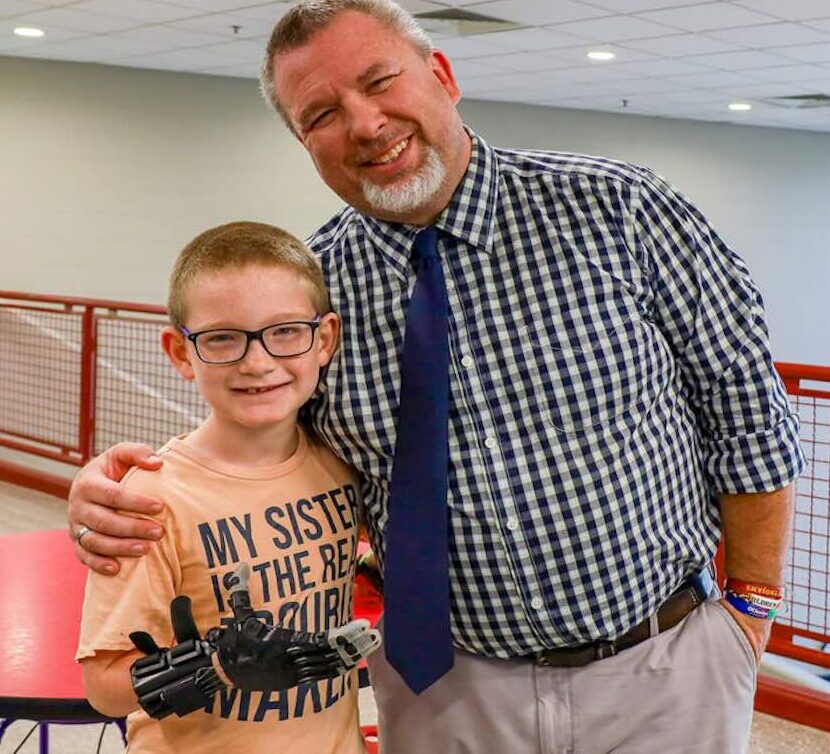
Kentucky Teacher of the Year Scott Johnson is a beloved STEAM teacher in Bowling Green who is focused on helping students connect their learning to real world applications. When he met a new student, Jackson Farmer, the two started a project to make Jackson his first functional prosthetic hand. The pair selected bioplastics, rigged wires and foam and built the device together. The total cost: only $30. Jackson offers a five-star review: “It helps me a lot.”