













Week 342
It is week 342 and we are thinking about how the education reform conversation changes when everyone...

Jump to: Top Tasks | From the Field | Key Resources | Moments of Resilience
It’s week 320 and we are thinking about AI and adaptation.“It’s really concerning how dependent we are,” Naomi Siegel, a high school senior, told Dana Goldstein in her New York Times article on AI in schools. Siegel took it upon herself to restrict her use of AI because she didn’t like the “stilted voice” it introduced into her writing. But across the country, more often than not, students are giving in to the temptation to have AI do the hard work for them.
Here is how Breton Sheridan, an English teacher at a charter high school in Philadelphia describes the problem: “They are using generative AI to write before they learn how to write. They are reading ChatGPT summaries of a book before they have ever read a book. The result is a diminished population.”
In response, America’s teachers at every level are changing how they run their classes. “In the era of artificial intelligence, take-home writing assignments have become so difficult to police for integrity that many educators have simply stopped assigning them,” Goldstein writes. “Instead, in a rapid shift, teachers are requiring students to write inside the classroom, where they can be observed … This transformation is happening across the educational landscape, from suburban districts and urban charter schools to community colleges and the Ivy League.”
In an age of AI it is clear that adaptation is necessary if we are to head off a generation of students who lose the ability to write for themselves and with it, in many crucial ways, the ability to think for themselves as well.
Last time in the New Reality Roundup, we looked at how declining enrollment is having an effect on charter schools and took note of big wins for ConnCAN, HawaiiKidsCAN and TennesseeCAN. This week, we examine how the education budget is reaching a crisis point in New York City and check in on science of reading progress with a new report from Fordham.
New York City’s unbalanced budget, which Mayor Zohran Mamdani called “a crisis of historic magnitude” last week, has a diagnosis from the Atlantic: it’s the schools.
“New York City spends more money per pupil—north of $40,000, according to one recent estimate—than any of the other 100 largest public-school districts in the country, and more than twice as much as the median district,” writes Marc Novicoff. “New York City’s public-school system is the largest in the country, but that’s not the problem. The problem, actually, is that the student body is small relative to the resources devoted to it, and shrinking fast—but the city and state governments won’t cut education spending accordingly. As long as that’s the case, the city’s financial situation will grow only harder to manage.”
Novicoff links the problem to three major factors:
Readers of the Roundup will be well familiar with the first contributing factor, as it has been a common refrain from 50CAN Policy Fellow Danyela Egorov as she’s worked to help New Yorkers understand the actual education value they’re getting for the tax expenditure.
The second factor reveals how special education policies can blow huge holes in district budgets when they don’t come with reasonable safeguards. The issue at hand involves “Carter Cases,” legal cases that are brought when families of children with special needs believe that the local public schools have failed to provide a Free Appropriate Public Education. This allows parents to send their students to private schools, with the state reimbursing tuition. This approach can work in moderation but in New York, spending on Carter Cases rose from $45 million in 2005 to $1.3 billion last year: a 2,788% increase. In a New York State Education Department analysis from 2022, researchers found that 98% of the state’s Carter Cases were filed by families living in New York City.
The final factor is the policies that keep a solution to the education budget at arm’s length. “Under a policy known as ‘hold harmless,’ the city government does not reduce a school’s budget as its enrollment declines. Instead, the funding keeps flowing even as it is spent on fewer and fewer students,” Novicoff writes. New York’s schools budget is exploding as the district tries to maintain compliance with this unrealistic approach to school finance.
At Fordham, David Griffith and Brian Fitzpatrick have a new report, based on the findings of a nationally representative survey of K-3 teachers, that examines the science of reading progress across the country. The big finding? There’s still a great deal of work left to do when it comes to implementation.
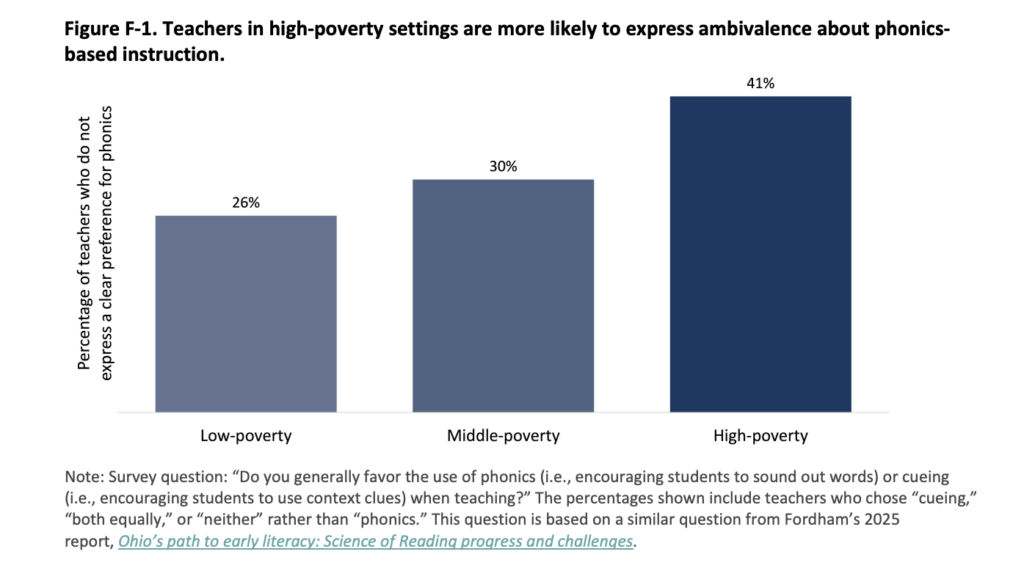
“At least a quarter of teachers—and at least a third of those in disadvantaged settings—are not fully committed to the science of reading,” the authors write. For teachers in high-poverty schools, 41% did not express a preference for phonics-based instruction, compared to 26% in low-poverty schools.
That’s a major problem because it’s the students in high-poverty schools that need instruction aligned with the science of reading the most. The 2024 NAEP found a nearly 30-point scale score gap in reading, the rough equivalent of three grade levels, between 4th grade students who were eligible for free or reduced-price lunch and those who were not eligible.
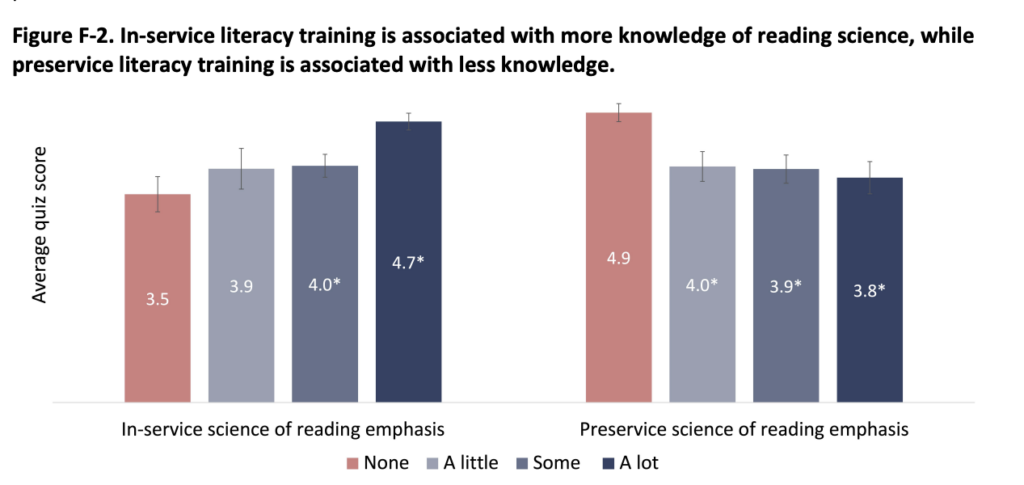
Part of the discrepancy may be attributed to a lack of pedagogical knowledge among new teachers. A 2025 report from EdTrust-Midwest found that “students who learn in school districts with the highest concentrations of poverty are nearly three times more likely than their peers in other districts to learn from a beginning teacher with fewer than three years of teaching experience.” That puts pressure on schools of education at colleges and universities to ensure students are emerging with strong literacy pedagogy, and the Fordham researchers found the opposite, alongside a prevalence of low-quality curriculum.
That’s a major problem because it’s the students in high-poverty schools that need instruction aligned with the science of reading the most. The 2024 NAEP found a nearly 30-point scale score gap in reading, the rough equivalent of three grade levels, between 4th grade students who were eligible for free or reduced-price lunch and those who were not eligible.
Part of the discrepancy may be attributed to a lack of pedagogical knowledge among new teachers. A 2025 report from EdTrust-Midwest found that “students who learn in school districts with the highest concentrations of poverty are nearly three times more likely than their peers in other districts to learn from a beginning teacher with fewer than three years of teaching experience.” That puts pressure on schools of education at colleges and universities to ensure students are emerging with strong literacy pedagogy, and the Fordham researchers found the opposite, alongside a prevalence of low-quality curriculum.
A note of progress here is that efforts in states to provide professional development on the science of reading for teachers are already having an effect, but it’s clear that schools of education are often failing to instruct the next generation of teachers on best practices for literacy.
“Better Spending, Better Schools,” the final priority of TennesseeCAN’s 2026 legislative goals, has now passed both the House and the Senate and now heads to the Governor’s desk. The legislation will give parents and taxpayers clear information about how schools are spending their budgets. With that bill passed, Executive Director Chelsea Crawford has completed the rare sweep of her legislative goals for the year.
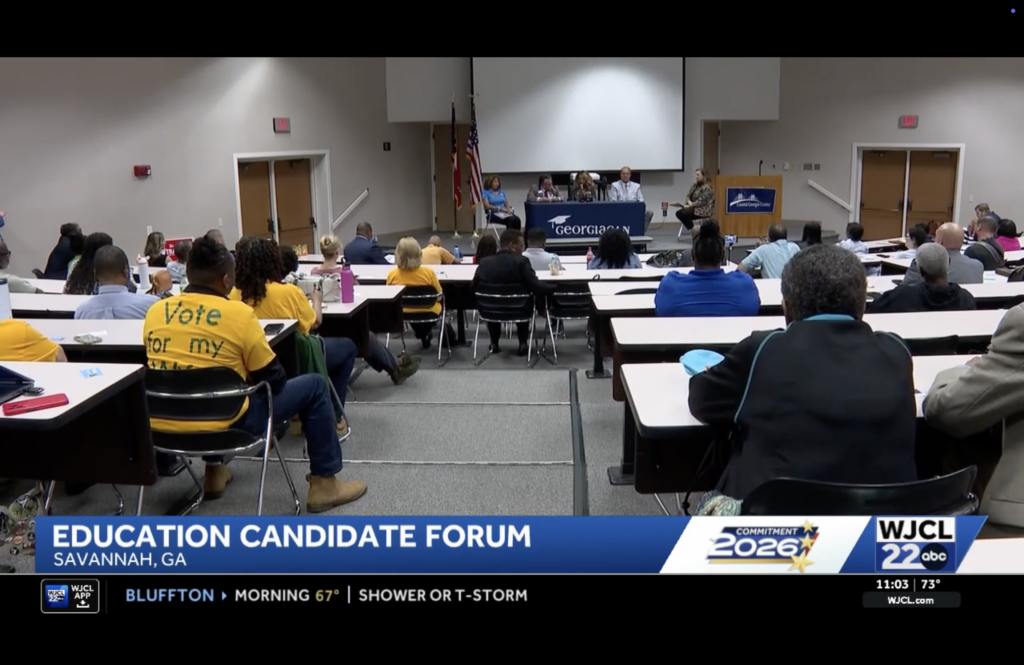
GeorgiaCAN held a candidate forum in Savannah for the upcoming state superintendent election, where the candidates disagreed over charter school authorization and on the best path forward to address literacy. The event was covered by multiple news outlets, including WTOC/CBS, which livestreamed the debate and provided a moderator, as well as WSAV/NBC.
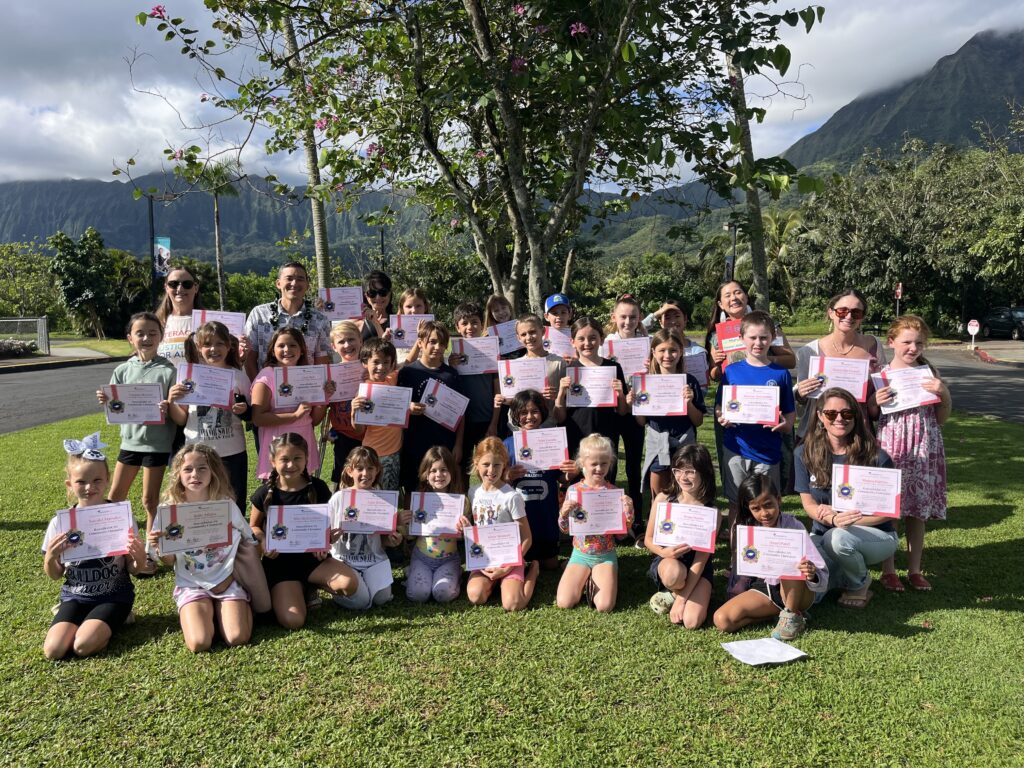
HawaiiKidsCAN made a surprise appearance at a local school assembly to award the student advocates who testified at the state capitol on behalf of HawaiiKidsCAN’s literacy bill. The participating students received certificates of appreciation and were given a standing ovation by the entire school.
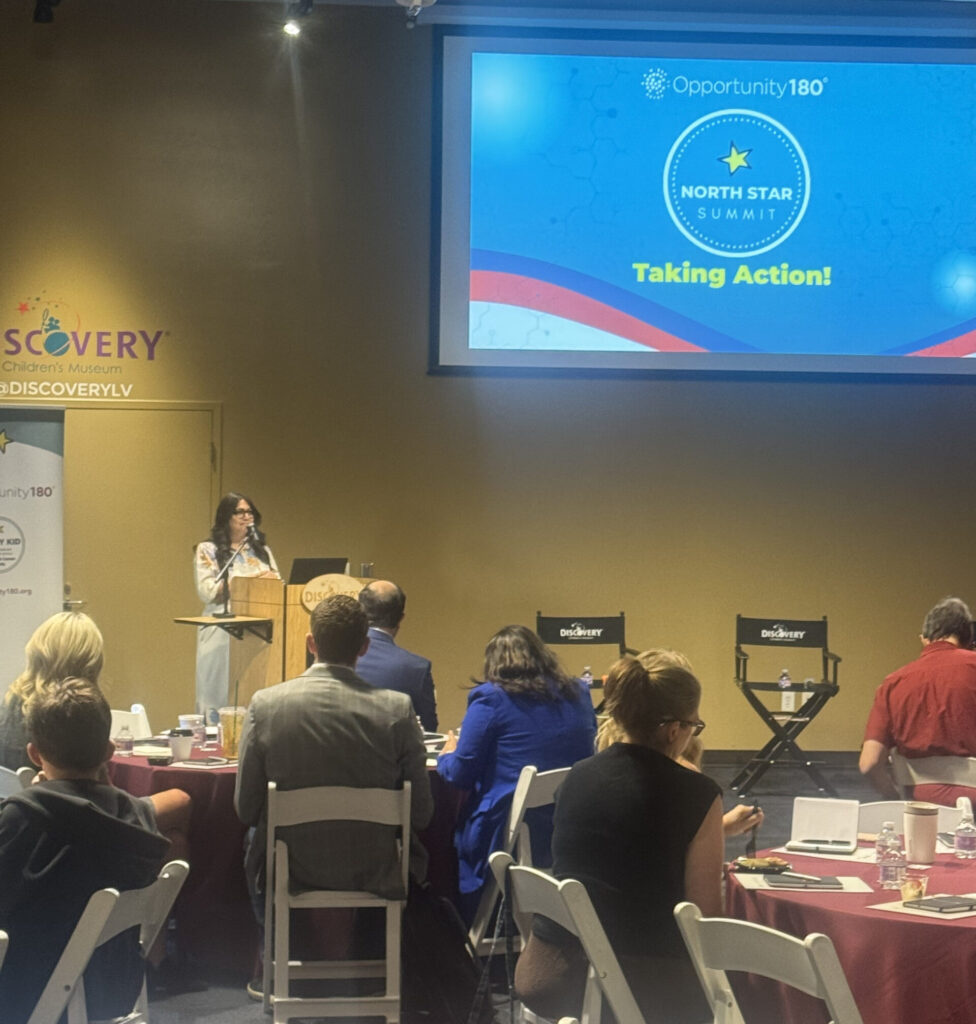
Battle Born Kids Matter’s Patricia Haddad Bennett presented at Opportunity 180’s annual North Star Summit, which brought together advocates, state elected officials and community partners to discuss the next priorities for Nevada’s education system. The conversation included the latest thinking from Excel in Ed’s Nathan Oakley on strengthening career and workforce programs.
“We’re adrift, it’s killing us politically and it’s killing our kids,” Arne Duncan told The 74’s Kevin Mahnken as part of a sweeping critique over his Democratic Party’s lack of vision on education.
From online courses to tutors to microschools, homeschool parents are drawing upon a number of resources as they design a customized education for their children, Johns Hopkins researcher Angela Watson tells The 74.
At Urban Institute, Kristin Blagg offers a new study that finds districts serving a higher share of students from low-income families are more vulnerable to federal funding cuts.
Brookings identifies the core design factors that are common among exemplary “free college” state grants, including early eligibility notices and ensuring that state dollars are applied first, before federal aid.
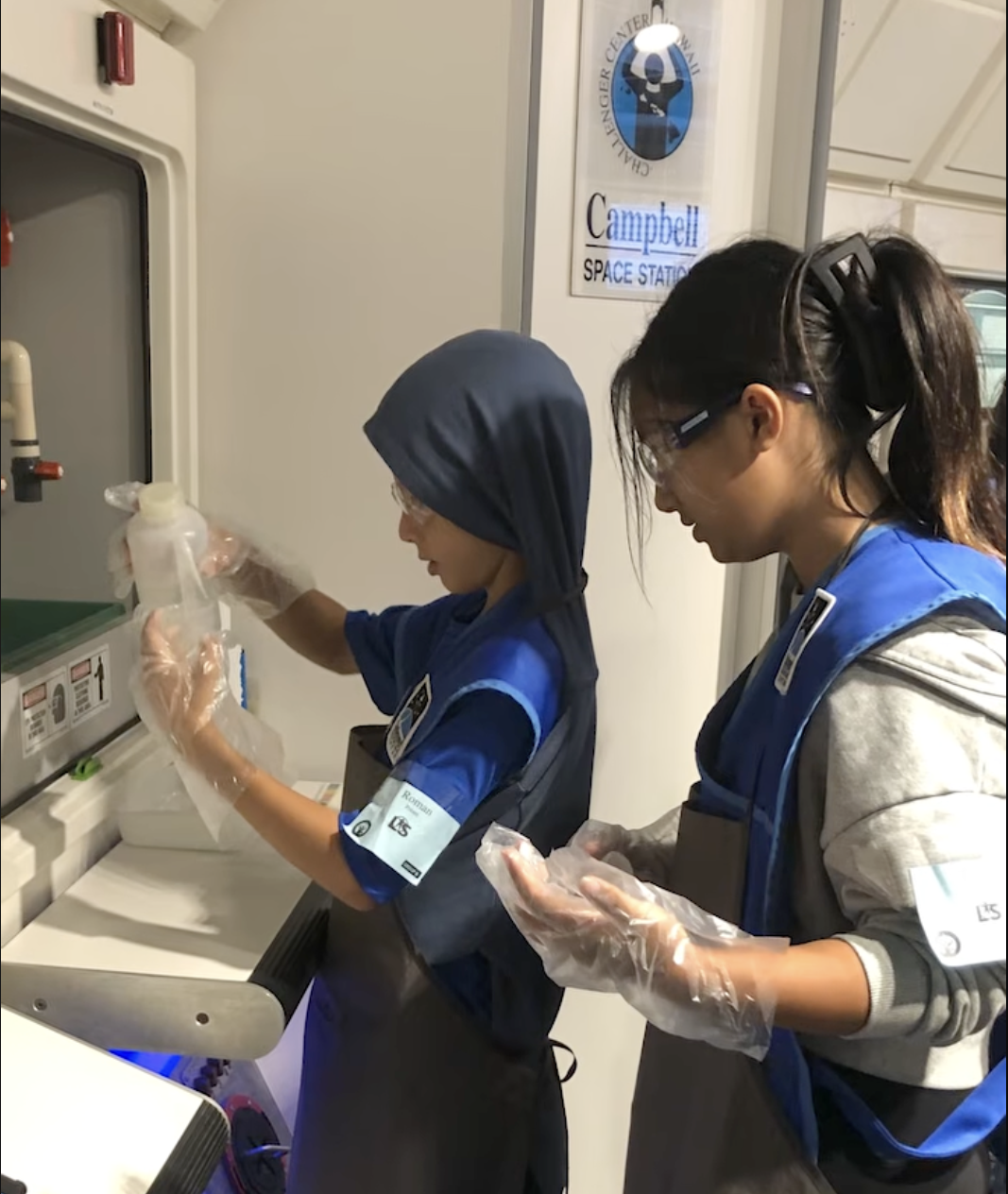
Students in Lillian Reynolds’ middle school science class at Voyager Public Charter School in Honolulu conduct experiments as if they were scientists on the International Space Station, part of a broader effort by Reynolds to help her students understand the interconnectedness of science by using space as a centering theme. From visits to the state observatories to space mission simulations at the Challenger Center of Hawaii, Reynolds wants her students to consider fields beyond hospitality or tourism. The 74 has more.